
A decade ago, anyone wanting to connect with the people shaping the future of psychedelic medicine needed more than curiosity — they needed a very good contact list. Researchers were scattered across universities, clinicians often worked on the fringes of mainstream psychiatry, and entrepreneurs struggled to find investors who could even spell psilocybin. Most conversations took place behind closed doors, at private gatherings or within small academic circles.
Today, that landscape looks very different.
As delegates departed the Interdisciplinary Conference on Psychedelic Research (ICPR) in the Netherlands this month, many were already discussing their next destination. Some were planning for Denver’s Psychedelic Science 2027, others were heading to New York’s Horizons Conference, while a growing number had their eyes on Australia and the Psychedelic Roundtable Symposium in Melbourne next March.
What has emerged over the past decade is something few could have predicted. Psychedelic medicine now has its own international conference circuit, and these events are increasingly where the direction of the field is debated, refined and, in some cases, decided.
The Industry’s European Meeting Place
For many researchers, ICPR has established itself as Europe’s leading scientific conference dedicated to psychedelic research. Hosted by the OPEN Foundation, the event brings together neuroscientists, psychiatrists, psychologists, clinicians and policymakers from around the world, creating a space where evidence, rather than enthusiasm, sets the tone.
Unlike more commercially oriented industry events, ICPR remains firmly anchored in science. Clinical data is scrutinised, treatment models are tested against emerging evidence, and new findings are met with rigorous debate rather than promotional framing. The result is an atmosphere that feels less like an industry showcase and more like a working scientific forum.
Increasingly, the questions being asked are not about whether psychedelic therapies work in principle, but how they can be implemented in practice. How do these treatments transition from controlled trials into everyday healthcare systems? Who funds them? What safeguards are needed at scale? And how can regulators balance patient access with safety and public confidence?
These are no longer abstract considerations. They are operational challenges facing a field moving steadily from research into real-world application.
From Speculation to Implementation
Only a few years ago, psychedelic conferences often carried the energy of a gold rush. Public companies were listing on stock exchanges, valuations surged, and each week seemed to bring another capital raise or headline-grabbing acquisition. The tone of the industry, particularly in investor circles, was defined by anticipation.
That phase has largely passed.
The speculative momentum has cooled significantly, and many psychedelic biotech companies have seen their valuations fall from pandemic-era highs. Investors are more selective, capital is harder to secure, and timelines for drug development are under greater scrutiny.
But rather than contracting, the sector is shifting shape.
The conversation has moved away from what psychedelic medicine might become and towards how it can function within real healthcare systems. Researchers are focusing more on outcomes and reproducibility, clinicians are developing treatment pathways and service models, and policymakers are grappling with regulation, workforce training and access frameworks.
The dreamers are still present, but they are now working alongside operators who are focused on execution.

The Conferences Defining the Global Conversation
As psychedelic medicine continues to mature, a small number of conferences have emerged as key gathering points for the international community. While each event has its own focus, together they form an increasingly connected global circuit that helps shape the direction of the field.
Psychedelic Science 2027, Denver
Often described as the largest psychedelic conference in the world, Psychedelic Science brings together researchers, clinicians, investors, policymakers and advocates from across the globe. It functions as an industry-wide checkpoint, offering a snapshot of scientific progress, regulatory developments and commercial direction.
For many attendees, it remains one of the most important gatherings on the calendar, not only for its scale but for the breadth of perspectives it brings into a single space.
ICPR, Netherlands
The Interdisciplinary Conference on Psychedelic Research has become Europe’s leading scientific forum dedicated to psychedelic research. Hosted by the OPEN Foundation, it is widely respected for its rigorous, evidence-driven approach and its emphasis on interdisciplinary exchange.
Rather than focusing on hype or commercial outcomes, ICPR prioritises scientific scrutiny. New research is dissected, methodologies are debated, and clinical implications are explored in depth, making it one of the most academically grounded events in the sector.
Horizons Conference, New York
One of the longest-running psychedelic conferences, Horizons has played a significant role in shaping public and professional discourse around psychedelic therapies. It brings together voices from science, medicine, policy and culture, creating a space where research meets broader societal context.
Its longevity has given it a unique position as a bridge between early scientific exploration and the evolving clinical landscape, helping translate emerging evidence into public understanding.
Psychedelic Therapeutics & Drug Development Conference, United States
This conference sits closer to the pharmaceutical and investment side of the industry. It focuses on the challenges of bringing psychedelic compounds through clinical development, regulatory approval and ultimately into healthcare markets.
Attendees typically include biotech executives, investors, regulators and drug developers, making it a key venue for discussions around commercialisation, compliance and the practical realities of drug development in a tightly regulated sector.
Psychedelic Roundtable Symposium, Melbourne
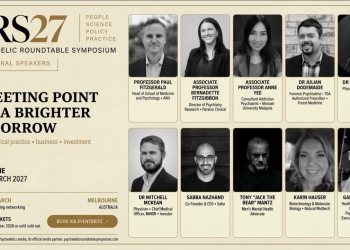
Scheduled for March 2027, the Psychedelic Roundtable Symposium reflects Australia’s growing role within the global psychedelic ecosystem. The event brings together psychiatrists, psychologists, researchers, clinicians and industry professionals from across Australia and the Asia-Pacific region.
As international attention increasingly turns towards Australia’s regulatory model and early clinical outcomes, the symposium is positioned as a key regional forum for discussion, collaboration and professional development within the sector.
Why Australia Matters
Australia now occupies a distinctive position in the global psychedelic landscape. Its decision to permit authorised psychiatrists to prescribe certain psychedelic therapies has attracted international attention and placed the country at the centre of a live regulatory experiment.
Regardless of where one sits on the policy debate, the global interest is undeniable. Researchers are watching patient outcomes closely, clinicians are assessing how treatment pathways develop in practice, policymakers are observing regulatory impacts, and investors are evaluating what the model might signal for future markets.
As a result, Australia is no longer a peripheral observer in the psychedelic conversation. It has become an active participant in a broader international dialogue spanning Europe, North America and the Asia-Pacific.
That shift creates opportunities not only for healthcare providers and researchers, but also for conferences, training institutions and professional networks seeking to position themselves within a rapidly globalising field.
The New Meeting Grounds
Every mature industry develops its own gathering places. Technology has Silicon Valley, finance has Davos, and medicine has its established scientific congresses and specialist forums.
Psychedelic medicine is now building its own version of that infrastructure.
The importance of events like ICPR or Psychedelic Science extends beyond the presentations delivered on stage. Their real significance lies in the fact that thousands of professionals now treat them as essential fixtures on an international calendar that barely existed a decade ago.
The sector still faces substantial challenges. Regulation remains complex, clinical access is limited, investment is cautious, and public understanding is still evolving. But the trajectory is increasingly clear.
The future of psychedelic medicine is no longer being shaped in isolation. It is being shaped in rooms where researchers, clinicians, policymakers and industry leaders are working through the same problems together.
From Amsterdam to Melbourne, those conversations are converging, and with them, a new phase of the industry is taking shape — one defined less by speculation and more by systems, implementation and scale.