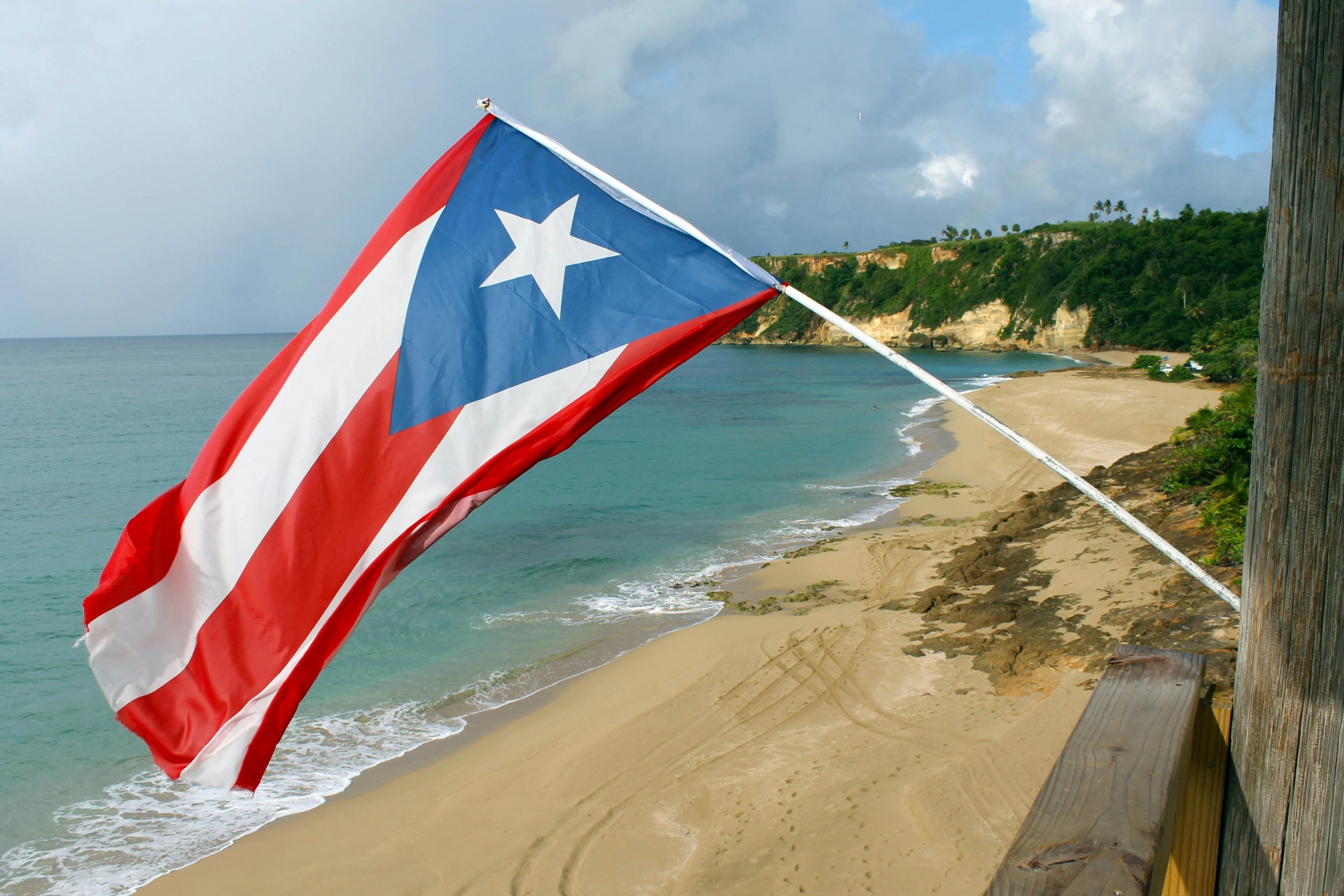

A new executive order could position the US territory as a research destination for emerging psychedelic therapies as clinicians, researchers and policy leaders gather in San Juan.
Puerto Rico is taking steps to strengthen its capacity for clinical research into emerging therapies, including psychedelics, as the US territory looks to establish a role in the development of new treatments for mental health and other complex conditions.
On 4 August, Puerto Rico Governor Jenniffer González-Colón signed Executive Order 2026-037, establishing public policy aimed at strengthening clinical research, developing controlled clinical trials and expanding the scientific capacity of the island’s healthcare system.
The order also directs the Puerto Rico Department of Health to assess the feasibility of a Pilot Clinical Research Program for Emerging Therapies.
Psychedelic therapies are explicitly included in the policy, alongside psilocybin, MDMA and ibogaine.
The order does not, however, legalise psychedelic-assisted therapy.
It expressly states that it does not authorise the routine clinical use of psychedelic therapies, ibogaine, psilocybin, MDMA or other compounds that remain under investigation. Instead, the immediate focus is on building the scientific, regulatory and institutional capacity needed to conduct clinical research and develop recommendations for future policy.
Puerto Rico’s existing controlled-substance framework lists psilocybin, psilocin and ibogaine as Schedule I substances.
That means the executive order does not create a legal market for psychedelic treatment or provide a new pathway for private clinics to begin offering psilocybin-assisted therapy.
Its significance is more straightforward: Puerto Rico’s government is beginning to work out what would be required to conduct more clinical research into emerging therapies on the island.
The order establishes a Scientific and Regulatory Advisory Committee within the Department of Health. The committee will bring together expertise in areas including clinical research, public health, bioethics, pharmacology, neurology, psychiatry, psychology and regulatory affairs.
Among its responsibilities will be assessing the available scientific evidence, evaluating the feasibility of a potential pilot programme, identifying infrastructure and workforce requirements, recommending research priorities and developing a strategic agenda for strengthening clinical research in Puerto Rico.
The Department of Health can also coordinate with universities, hospitals, nonprofit organisations and federal agencies including the FDA, NIH, HHS, VA and DEA.
That could give Puerto Rico a foundation for attracting clinical trials and research partnerships if the programme moves forward.
The psychedelic community is already gathering in San Juan
The policy announcement comes just weeks before the Puerto Rico Psychedelic Summit 2026, which will take place in San Juan on 21 and 22 August.
Hosted by the Pravan Foundation, the two-day event will focus on psychedelic-assisted therapies, scientific research and the development of systems of care in Puerto Rico.
Friday’s programme, titled “Ibogaine for Puerto Rico”, will focus specifically on ibogaine and its potential role on the island. Saturday will cover psychedelic medicine fundamentals. The event is being held at the Hilton Garden Inn in San Juan.
The timing puts the government initiative alongside an existing community of clinicians, researchers and policy advocates working on psychedelic medicine in Puerto Rico.
It also highlights the questions that would have to be addressed if the island eventually moves beyond research towards clinical use: how trials should be conducted, how practitioners should be trained, what patient-safety standards should apply and what regulatory framework would be required.
For now, those questions remain ahead of any decision to authorise psychedelic treatments outside clinical research.
Puerto Rico’s position within the US psychedelic landscape
The move comes as psychedelic research receives increased attention from the US federal government.
In April, President Donald Trump signed an executive order directing federal agencies to accelerate research and regulatory pathways for potential treatments for serious mental illnesses, including psychedelic drugs and ibogaine compounds.
The order directed the FDA to provide National Priority Vouchers to qualifying psychedelic drugs with Breakthrough Therapy designations and called for the FDA and DEA to establish a pathway for eligible patients to access certain investigational psychedelic drugs under the Right to Try framework.

The FDA subsequently announced national priority vouchers for companies studying psilocybin for treatment-resistant depression and major depressive disorder, as well as methylone for PTSD. It also allowed an early-stage clinical study of noribogaine hydrochloride to proceed.
Puerto Rico operates within that broader US regulatory environment while maintaining its own local healthcare and controlled-substance framework.
That could make the territory an interesting location for US-linked clinical research, particularly if its government succeeds in developing the infrastructure needed to support trials involving emerging therapies.
The executive order itself points to Puerto Rico’s existing universities, hospitals, research centres, healthcare systems and trained professionals as a foundation for increasing participation in national and international multicentre trials.
From research infrastructure to psychedelic medicine
The opportunity for Puerto Rico will depend on what happens next.
The executive order is a starting point rather than a clinical approval. The proposed pilot programme still has to be assessed, the advisory committee has to develop its recommendations and any future research programme will have to operate within applicable Puerto Rican and US regulations.
There are also practical questions around funding, clinical infrastructure, researcher and practitioner training, patient recruitment and the handling of Schedule I substances.
But a research-first approach could give Puerto Rico an opportunity to develop those systems before psychedelic treatments reach wider clinical use.
That may prove particularly relevant as the US psychedelic sector moves from early-stage research towards the much harder questions surrounding drug development, clinical trials and eventual healthcare delivery.
Puerto Rico has not legalised psychedelic therapy.
It has done something more limited, but potentially significant: its government has formally begun examining what it would take to build the clinical research infrastructure needed to study emerging therapies.
With researchers, clinicians and policy advocates gathering in San Juan later this week, the next phase will be about whether that policy develops into an actual research programme — and whether Puerto Rico can turn its existing healthcare and scientific infrastructure into a meaningful role in the emerging psychedelic medicine field.