
Fiji is destroying cannabis plants by the tens of thousands while simultaneously preparing for the possibility that the same plant could become a legitimate industry. That contradiction is now at the heart of Fiji’s cannabis story: a crop that has been treated for generations as an illicit agricultural commodity is increasingly being discussed by government as a potential source of medicine, investment, employment and export revenue.
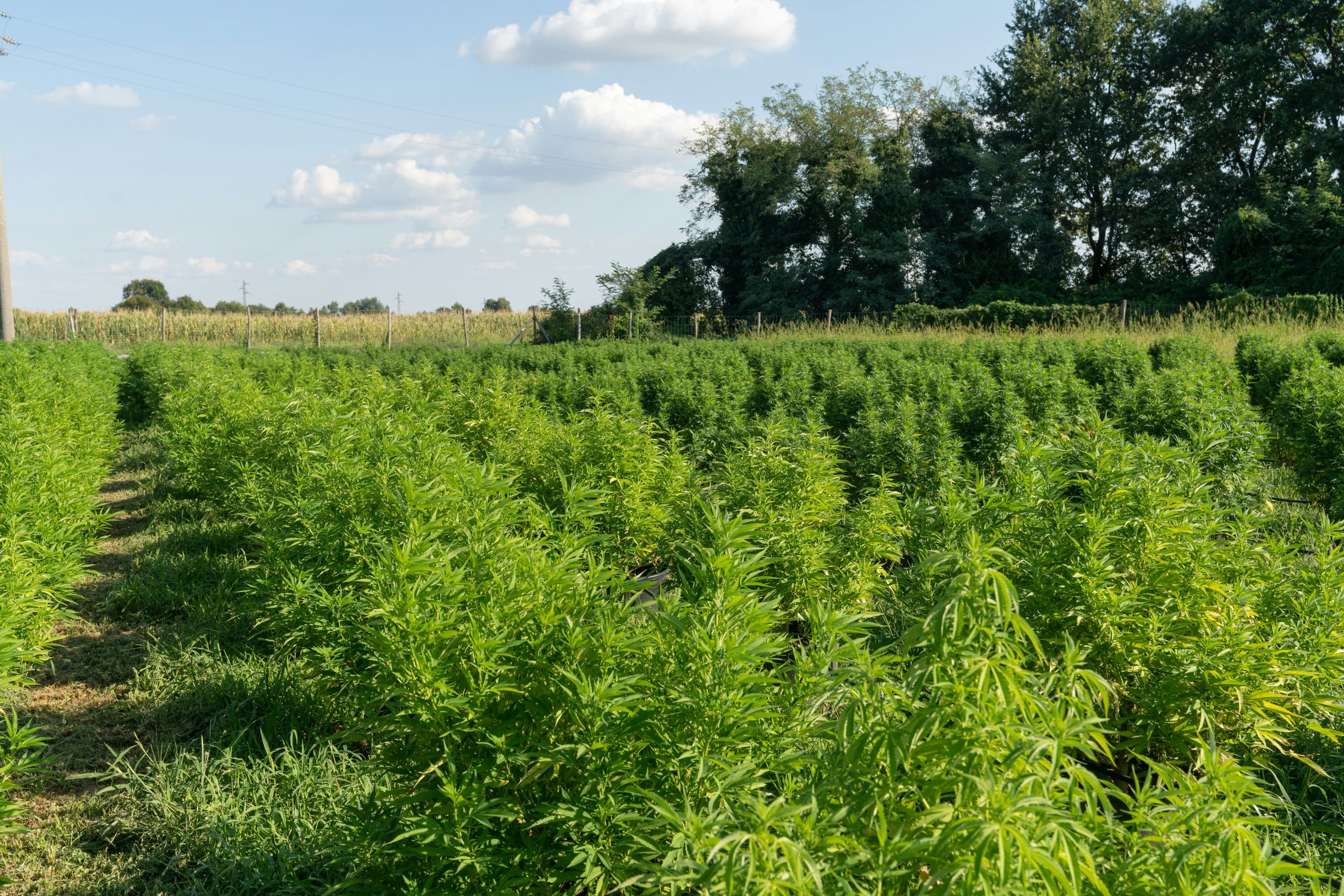
In March, police used drones to locate a cannabis farm in Vusasivo, in the Northern Division, seizing more than 7,000 plants, some reportedly more than four metres tall. By May, a joint Fiji Police and Republic of Fiji Military Forces operation had seized 47,042 cannabis plants from 93 farms in the Northern Division. By July, authorities were reporting that more than 74,000 plants had been uprooted in the region.
The scale of those seizures makes one thing clear: this is not a small underground hobby. Cannabis cultivation has been part of Fiji’s illicit agricultural economy for generations, creating a complicated starting point for a government now considering whether some form of that agricultural activity could eventually be brought inside a regulated legal framework.
A History That Goes Back More Than a Century
Cannabis is not an ancient indigenous Fijian crop. Historical research presented to Fiji’s Parliament indicates that cannabis, or Indian hemp, was brought to Fiji by seafarers and indentured labourers, with the country’s sugar plantations providing an environment in which cultivation eventually took hold.
Over time, cultivation became particularly associated with remote agricultural communities, including parts of Kadavu, Vanua Levu and Viti Levu. For some farmers, cannabis became a cash crop, and that history matters because Fiji is not trying to create a cannabis economy from nothing. It is trying to decide what to do with an agricultural economy that already exists, largely outside the law.
That law remains tough.
Under Fiji’s Illicit Drugs Control Act 2004, unlawful possession, cultivation, production, supply and use of an illicit drug can carry a maximum penalty of FJ$1 million or life imprisonment, or both. Cannabis and cannabis resin remain classified as illicit drugs.
Those are statutory maximums rather than automatic sentences, and actual penalties vary according to the circumstances of individual cases. In February 2026, for example, a man found with 15.2 grams of marijuana received a three-month prison sentence that was suspended for two years.
At the same time, Fiji’s prison system is dealing with a rapidly expanding population of people convicted of drug offences. Corrections data showed 255 convicted prisoners serving sentences for drug offences in 2024, while the service warned in March 2026 that the number could reach around 500 by the end of the year if the trend continued. Those figures cover all drug offences rather than cannabis alone, so they cannot be treated as a count of people imprisoned for marijuana.
The government has also approved a dedicated drug rehabilitation centre within Fiji Corrections, reflecting a broader shift towards treating the country’s growing drug problem as both a criminal justice and public health issue.
Yet while police and corrections authorities are confronting the consequences of illicit drug markets, cannabis itself is increasingly moving into a very different conversation.
From Eradication to Medicinal Cannabis
In December 2024, Fiji’s Cabinet considered a feasibility study into potential nutraceutical and medicinal cannabis industries prepared with Australian support. The study examined market and economic feasibility, regulatory requirements, investment, operational considerations and the potential social and economic impacts of establishing such an industry.
Cabinet subsequently approved the drafting of medicinal cannabis legislation.
That did not legalise cannabis, and it did not create an immediate pathway for farmers to begin cultivating commercially. Politically, however, it represented an important shift: the idea of a regulated medicinal cannabis industry had moved from speculation into formal policy development.
The process has continued.
In July 2026, Finance Minister Esrom Immanuel said the government’s Nutraceutical and Medicinal Cannabis Task Force had conducted 17 consultations involving 518 people and 12 government agencies. According to the minister, 75% of those consulted supported exploring a medicinal cannabis industry.
Fiji is therefore approaching a genuine policy crossroads. Police are being asked to destroy illegal cannabis while the government is simultaneously investigating how cannabis could become a controlled medicinal product and, potentially, an export industry.

The tension is obvious, but the two positions are not necessarily incompatible. A government can continue enforcing prohibition while developing a tightly controlled legal framework for specific medical and industrial uses. The difficult part is deciding what that framework should look like — and who should benefit from it.
So Who Gets to Grow It?
If Fiji creates a legal medicinal cannabis industry, one of the most important questions will be who actually gets to participate.
Will the industry be dominated by large commercial operators and overseas investors, or will Fijian farmers have a meaningful opportunity to become licensed producers? Could existing agricultural communities transition into regulated cultivation under strict pharmaceutical standards? Could cooperatives or contract-farming models provide a pathway into the industry? And what role will iTaukei landowners play in determining who controls and benefits from cultivation on their land?
There is no serious argument for simply handing licences to people currently growing cannabis illegally. Medicinal cannabis production requires secure cultivation, testing, traceability, quality control, consistent genetics and strict safeguards against diversion into the black market. Pharmaceutical-grade cultivation is a very different proposition from growing cannabis for an illicit domestic market.
But Fiji also cannot pretend that it has no existing agricultural knowledge.
Thousands of plants are being discovered because people already know how to grow the crop. Farmers have developed knowledge of local growing conditions, cultivation techniques and the agricultural realities of producing cannabis in Fiji, even if that knowledge currently exists outside the country’s legal economy.
The policy challenge is whether some of that knowledge and capacity can eventually be redirected into a legal, controlled and productive industry.
That would not mean legitimising the existing illicit market. It would mean recognising that the transition from prohibition to regulation does not have to begin with a blank sheet of paper.
Fiji Has a Chance to Get the Transition Right
The police are enforcing the law that exists today. The government is working on the law that could exist tomorrow. Those positions are not inherently contradictory, but the way Fiji manages the transition between them could have significant consequences.
If medicinal cannabis legislation is eventually passed, the country will have to confront a series of questions that go well beyond whether cannabis itself should be permitted for medical purposes.
Who gets licences? Who owns the production? Who controls the supply chain? Who captures the economic value? How much of the industry will be controlled by foreign capital? And, perhaps most importantly, will ordinary Fijians get a meaningful opportunity to participate?
These questions matter because Fiji has an unusual opportunity.
The country could build a medicinal cannabis industry around pharmaceutical standards, public safety and export credibility while also creating legitimate agricultural opportunities for local communities. Properly structured, the industry could potentially connect existing agricultural capacity with a higher-value global pharmaceutical market.
Alternatively, Fiji could create an industry in which the plant is legal only for those with enough capital, infrastructure and regulatory expertise to enter it.
The difference will be determined by the legislation now being developed.
For decades, cannabis in Fiji has been treated primarily as a policing problem. The tens of thousands of plants being destroyed across the Northern Division are evidence that the illicit market remains substantial.
But the Cabinet is now considering whether the same crop could have a different future.
Not a free-for-all. Not recreational legalisation. But a tightly regulated medicinal industry built around agriculture, healthcare and potentially exports.
The plant is already there. The farmers are already there. The government is now deciding what happens next.
The debate has moved to the Cabinet table.
The question now is who gets a seat at it.
Yadra Mai Viti.