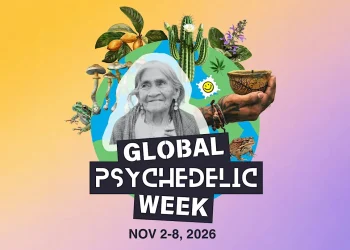
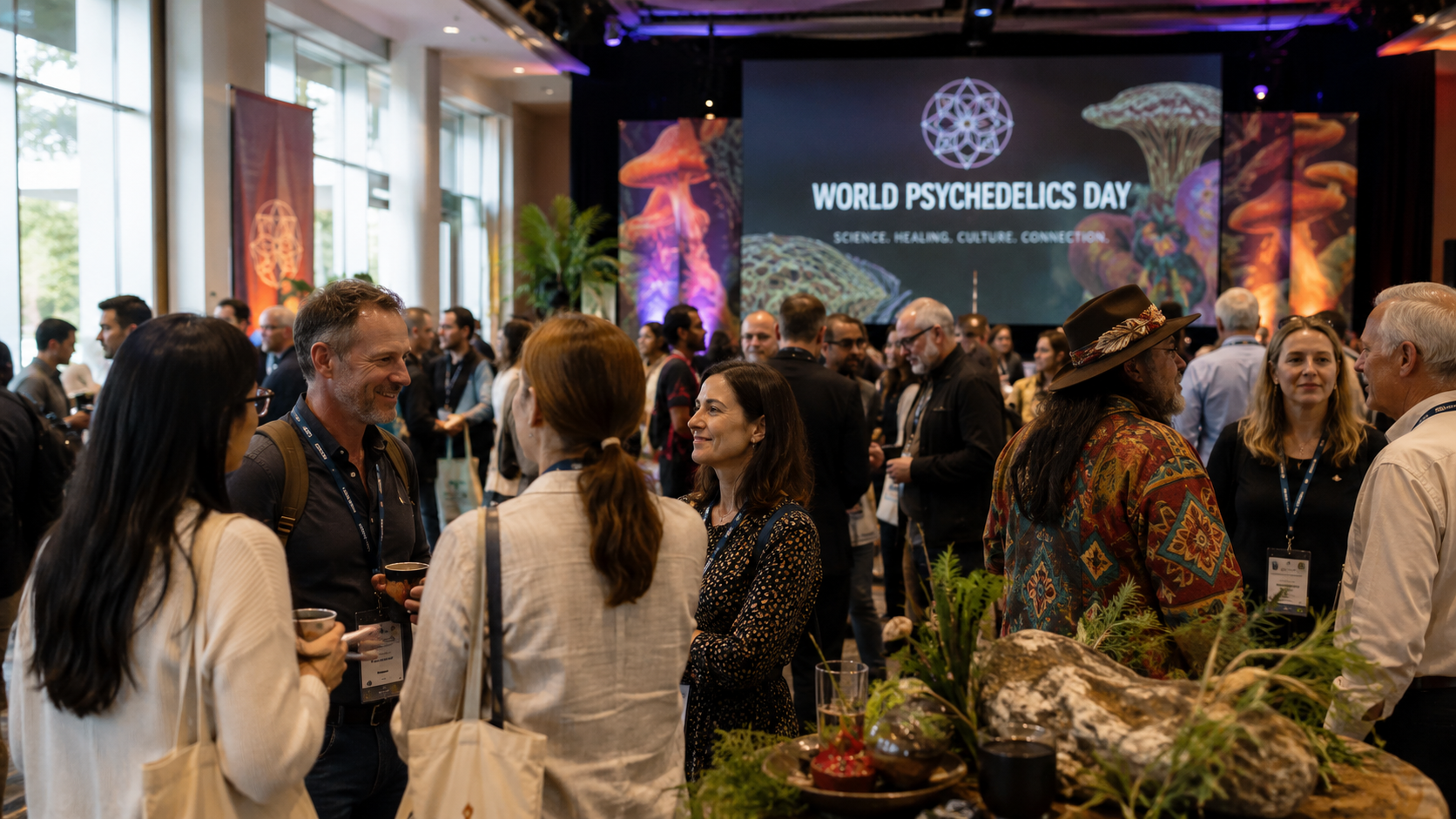

On June 20, thousands of people across the world marked World Psychedelics Day 2026, an annual global awareness initiative that continues to gain momentum as psychedelic medicines move further into mainstream scientific, clinical, and public discourse.
Held each year on 6.20, World Psychedelics Day has evolved into a symbolic international gathering point for researchers, clinicians, policymakers, Indigenous knowledge holders, advocates, and the broader public. While the movement began as an awareness campaign, it has increasingly become a reflection of the growing global shift toward evidence-based psychedelic medicine and a broader reconsideration of humanity’s relationship with consciousness, healing, and mental health.
Founded in 2021, the initiative was established with a clear objective: to create a platform for informed and responsible conversations about psychedelics, their therapeutic potential, and their cultural significance. Since then, organizers say participation has expanded across more than 60 countries through a combination of educational events, public discussions, artistic collaborations, and community-led initiatives.
The significance of World Psychedelics Day in 2026 feels particularly timely.
The global psychedelic sector is entering a pivotal phase. Clinical research continues to produce increasingly compelling evidence around the therapeutic potential of compounds such as psilocybin, MDMA, ketamine, ibogaine, and DMT for the treatment of serious mental health conditions including treatment-resistant depression, PTSD, addiction, and end-of-life distress.
At the same time, regulators, investors, and healthcare systems are moving from observation to action.
In Australia, the country remains at the forefront of regulatory reform following the landmark rescheduling of psilocybin and MDMA for specific psychiatric conditions under tightly controlled pathways. In the United States, the FDA’s evolving stance on psychedelic-assisted therapies continues to shape market expectations, while Europe, Canada, and parts of Latin America are also accelerating research and policy discussions.
This year’s World Psychedelics Day has again underscored one of the most important themes shaping the modern psychedelic movement: the balance between cutting-edge science and ancient wisdom.
Organizers consistently emphasize the importance of honouring Indigenous and traditional knowledge systems that have preserved the ceremonial and medicinal use of psychoactive plants for generations. For many within the global psychedelic community, progress is not solely measured by clinical trials, regulatory milestones, or commercial investment. It is also measured by whether modern systems can integrate ethical, cultural, and historical perspectives into the future of psychedelic medicine.
This remains one of the defining conversations of the sector.
As billions of dollars flow into psychedelic drug development and mental health innovation, questions around ethics, accessibility, reciprocity, and Indigenous rights are becoming central rather than peripheral issues.
Who benefits from commercialization?
How do healthcare systems ensure equitable access?
Can traditional healing knowledge be respected rather than exploited?
These questions increasingly sit alongside scientific breakthroughs.
World Psychedelics Day provides a platform where these conversations can coexist.
The initiative’s longer-term ambition is also notable. Organizers continue to pursue formal recognition from the United Nations, arguing that an internationally recognized awareness day could help promote evidence-based education, reduce stigma, and foster more informed public discussions around psychedelic medicines and traditional healing practices.
Such recognition would represent a major symbolic milestone for the global movement.
Only a decade ago, discussions about psychedelics in mainstream healthcare and public policy remained highly stigmatized. Today, the conversation has fundamentally changed. Leading universities are running dedicated psychedelic research programs. Venture capital continues flowing into psychedelic biotech. Governments are cautiously exploring therapeutic pathways. Major healthcare institutions are increasingly acknowledging the limitations of conventional approaches in treating complex mental health disorders.
Against this backdrop, World Psychedelics Day has become more than a date on the calendar.
It now serves as a marker of how far the global psychedelic movement has come, and how much work remains ahead.
The future of psychedelics will not be shaped by science alone. Nor will it be shaped purely by public policy, commercial capital, or advocacy. Its future will likely depend on how effectively these worlds can work together, combining rigorous clinical evidence with ethical frameworks, cultural respect, and accessible models of care.

That is ultimately what makes World Psychedelics Day increasingly important.
It invites a broader conversation about healing itself.
Not simply about molecules or medicines, but about mental health, consciousness, human wellbeing, and the evolving search for better ways to address some of society’s most pressing challenges.
As the global psychedelic sector matures, one thing is becoming increasingly clear: this movement is no longer operating at the fringes.
It is now firmly part of a much larger conversation about the future of medicine, mental health, and human potential.
And each June 20, that conversation grows louder.