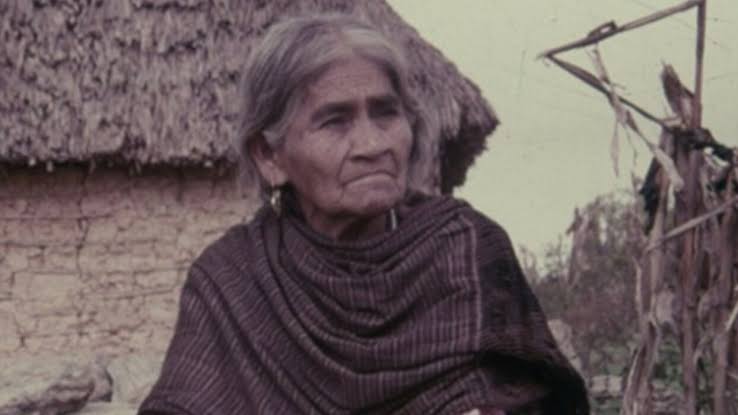

Long before psilocybin was being studied in hospitals and universities, and decades before psychedelic medicine became a commercial industry, an Indigenous healer in the mountains of Oaxaca was working with psychedelic mushrooms as part of a deeply spiritual healing tradition.
Her name was María Sabina.
Born in 1894 in Huautla de Jiménez in Mexico’s Sierra Mazateca, Sabina was a Mazatec curandera, or traditional healer, and sabia, meaning a wise woman. She would become one of the most recognisable figures in psychedelic history, although she never set out to create a movement or become an international symbol of psychedelic culture.
Her significance goes well beyond her association with psilocybin mushrooms. Sabina’s life sits at the point where an Indigenous healing tradition encountered Western science, popular culture and, eventually, the modern psychedelic industry.
The healer before the legend
Sabina inherited knowledge of the sacred mushrooms through her family and community. Within Mazatec culture, their use was embedded in ceremony, spirituality and healing rather than separated from everyday life and treated as an isolated psychoactive experience.
The mushrooms were traditionally used during an overnight ceremony known as a velada, incorporating prayer, singing, chanting, ritual and healing. They were sometimes referred to as “little saints” or “holy children”, reflecting their place within the Mazatec spiritual worldview.
For Sabina, the mushrooms were not understood through the language now used by psychedelic science. There was no discussion of serotonin receptors, neuroplasticity, clinical endpoints or depression scores. The mushroom belonged to a wider system of healing involving the individual, the healer, the community and the spiritual world.
That history is increasingly relevant as modern psychedelic medicine attempts to understand why the effects of psychedelics cannot always be separated from the circumstances in which they are taken. Preparation, environment, intention, therapeutic support and integration have all become important areas of interest in contemporary psychedelic research.
The Mazatec tradition had its own established framework for those surrounding elements long before they became subjects of clinical investigation.
Then came Gordon Wasson
The encounter that would transform Sabina’s life, and help shape the history of psychedelic science, came in the 1950s.
American banker and amateur mycologist R. Gordon Wasson had become fascinated by reports of psychoactive mushroom use among Indigenous communities. In 1955, he travelled to the Sierra Mazateca and participated in a velada conducted by Sabina.
It was an encounter between two very different worlds: a centuries-old Indigenous healing tradition and a Western investigator determined to understand the mushrooms behind it.
In 1957, Wasson published an account of his experience in Life magazine, introducing the Mazatec mushroom tradition to an enormous Western audience.
The consequences were immediate and lasting.
Western interest in psychedelic mushrooms grew rapidly. Swiss chemist Albert Hofmann, working for Sandoz, isolated and synthesised psilocybin and psilocin in the late 1950s, allowing the compounds to be studied independently of the mushrooms from which they came.
A new chapter of psychedelic science had begun.
Sabina had inadvertently become part of a chain connecting Mazatec mushroom traditions with Western psychedelic research, the development of synthetic psilocybin and, decades later, the emergence of psychedelic-assisted therapy.
But the story did not unfold evenly for everyone involved.
The price of becoming famous
The attention brought to Huautla was far from an uncomplicated success for Sabina or her community.
Following Wasson’s article, Western travellers began arriving in the region looking for psychedelic mushrooms and hoping to experience the ceremonies for themselves. A practice that had existed within a specific cultural and spiritual setting became increasingly associated with tourism and recreational psychedelic use.
Huautla became internationally known as a destination for people seeking mushrooms. Sabina herself became famous beyond Mexico while also facing hostility within her own community over the disruption brought by outsiders.
Her home was reportedly burned on several occasions, and she was blamed by some local people for the influx of foreigners.
The episode remains one of the more uncomfortable chapters in the history of Western psychedelic culture.
The same exposure that introduced millions of people to an Indigenous mushroom tradition also contributed to tourism, commercialisation and disruption in the community where that tradition had been maintained.
It is a pattern that has continued to follow psychedelics as Indigenous knowledge, plants and ceremonial practices have entered Western scientific and commercial systems.
More than the mushroom
It is tempting to reduce Sabina’s legacy to a single historical role: the Indigenous healer who introduced the West to psychedelic mushrooms.
That interpretation misses much of what makes her story significant.
The Mazatec tradition did not treat the mushroom as an isolated chemical experience. The ceremony had a structure, a healer, a setting, a shared purpose and an established cultural understanding of altered states of consciousness.
Modern psychedelic therapy is obviously not the same as a velada, and there is a danger in drawing a simplistic equivalence between Indigenous ceremony and contemporary clinical treatment. Traditional practices should not be romanticised or treated as raw material for Western psychedelic culture.
But the contrast is revealing.
Modern psychedelic medicine has spent decades trying to understand the relationship between a psychedelic compound and everything that surrounds its administration. Researchers continue to investigate the influence of preparation, expectations, environment, therapeutic support and integration on psychedelic experiences and their outcomes.
Sabina’s tradition existed within a framework where those surrounding elements were inseparable from the mushroom itself.
The lesson is not that Indigenous ceremony anticipated modern clinical science in every respect. It is that the Western focus on the molecule represents only one way of understanding psychedelics.
A legacy that continues
María Sabina died in 1985, but her story did not end there.
The Mazatec relationship with sacred mushrooms has continued, despite the effects of tourism, prohibition, commercialisation and the international fascination with psilocybin. Academic and cultural records have documented the continuing significance of mushroom traditions within Mazatec communities.
Sabina’s songs and oral poetry have also survived. Recordings of her chants and accounts of her ceremonies remain part of the cultural record associated with Oaxaca and the Mazatec tradition.
Her legacy therefore cannot be reduced to the familiar photographs of an elderly Indigenous woman holding mushrooms.
She was a healer whose knowledge existed within a particular culture and spiritual tradition. The global fame that followed brought recognition, but it also brought consequences that she could never have anticipated.
That tension is central to understanding her place in psychedelic history.
The uncomfortable question for today’s psychedelic industry
There is an obvious irony in the modern psychedelic renaissance.
Today, pharmaceutical companies are developing proprietary psychedelic medicines, universities are running clinical trials, investors are funding psychedelic biotechnology and clinicians are being trained to deliver psychedelic-assisted treatments.
At the beginning of that modern story sits an Indigenous woman who did not patent her knowledge, establish a pharmaceutical company or attempt to commercialise the practice she inherited.
Her contribution was cultural rather than commercial.
That raises difficult questions about Indigenous knowledge, intellectual property and who ultimately benefits when traditional practices become the foundation for new scientific and commercial developments.
The history of psilocybin is not simply a story of Western scientists discovering a promising compound. Indigenous communities had been working with psychedelic mushrooms within established cultural frameworks for generations before Western science began investigating their chemistry.
Recognition of that history does not require rejecting modern psychedelic research. It does, however, require a more honest account of where some of its knowledge came from and what happened when that knowledge moved between cultures.
Why María Sabina still matters
The questions facing psychedelic medicine today would not have been unfamiliar in principle to the traditions Sabina inherited.

How should an altered state be approached? What role does the person guiding the experience play? How important are setting, intention and preparation? How should an experience be understood afterwards?
Modern science is investigating those questions using clinical trials, neuroscience and pharmacology. Indigenous traditions approached them through ceremony, culture and spiritual practice.
The two systems are not interchangeable, but their coexistence is an important part of psychedelic history.
María Sabina stands at one of the most consequential crossroads in that history: between Indigenous knowledge and Western science, sacred practice and popular culture, traditional healing and a rapidly commercialising psychedelic industry.
More than four decades after her death, her significance is therefore not simply that she became associated with psychedelic mushrooms.
Her life shows what can happen when knowledge moves from one culture into another, what can be gained, what can be lost, and who gets to benefit.
For an industry increasingly focused on developing the next generation of psychedelic medicines, that history is worth remembering.
The molecule may be new to modern medicine. The relationship between humans and psychedelics is not.