
Australia’s modern psychedelic medicine story is usually traced to the Therapeutic Goods Administration’s 2023 decision to allow authorised psychiatrists to prescribe psilocybin for treatment-resistant depression and MDMA for post-traumatic stress disorder.
But the country had already spent more than a decade experimenting with psychedelic psychiatry.
In Melbourne in the early 1960s, psychiatrist Dr L. Howard Whitaker was using LSD alongside psychotherapy, publishing clinical research and helping shape the first regulatory framework for medical LSD use in Victoria.
His career would eventually become inseparable from one of Australia’s most notorious psychedelic stories: the rise of Anne Hamilton-Byrne and The Family.
Whitaker’s history is not a straightforward story of a forgotten pioneer. It is an account of an early attempt to use psychedelics in psychiatry, the promise clinicians saw in them, and the lack of scientific and ethical safeguards surrounding the field.
LSD enters Australian psychiatry
Whitaker trained as a psychiatrist in Melbourne and became associated with Newhaven Private Psychiatric Hospital in Kew, where psychiatrists including William Russell Richards, Harry Bethune and John Mackay were also involved in psychedelic treatment.
Newhaven was part of a much broader international movement.
After LSD became available to researchers through Sandoz Laboratories in Switzerland, psychiatrists in Europe, North America and Australia began investigating whether the drug could be used alongside psychotherapy. The theory was that LSD could temporarily alter consciousness and loosen psychological defences, allowing patients to revisit traumatic experiences or material that was difficult to access through conventional psychotherapy.
Whitaker became one of the Australian doctors most closely associated with this approach.
His most significant published work appeared in the Medical Journal of Australia in January 1964, in a two-part paper titled Lysergic Acid Diethylamide in Psychotherapy.
The study covered 100 patients who received LSD-assisted psychotherapy. Patients underwent preparation before treatment and were given doses generally between 100 and 250 micrograms. Whitaker then assessed their outcomes and compared them with a retrospective control group receiving conventional psychotherapy.
Whitaker reported 47 cases as successful, 18 as borderline and 35 as failures. He concluded that the LSD group had achieved better results than the control group.
By today’s standards, the research was a long way from the clinical trials underpinning modern psychedelic medicine.
There was no randomisation. The control group was retrospective. Patients had differing diagnoses, and the outcomes were assessed by Whitaker himself rather than through blinded or independently validated measures.

The findings cannot be treated as equivalent to contemporary evidence for psychedelic-assisted therapy.
The study remains historically significant, however. It was one of Australia’s earliest substantial attempts to evaluate psychedelic psychotherapy systematically, and it showed that Australian psychiatrists were investigating LSD as a therapeutic tool years before the current psychedelic renaissance.
From experimentation to regulation
As LSD use spread beyond medical and research settings internationally, the environment around the drug changed.
Victoria moved towards a regulated system for medical use. In 1967, 19 psychiatrists were given warrants by the Victorian Chief Health Officer allowing them to use LSD in clinical settings. Whitaker was one of them.
He was also appointed to a newly established subcommittee examining the uses and abuses of LSD and other hallucinogenic drugs, alongside psychiatrists D. T. Barnes and Eric Seal.
The regulatory framework required doctors to obtain informed consent, administer LSD in hospital settings, maintain proper records and have appropriate medication available to terminate an LSD session if necessary.
A 1969 inspection of the 19 authorised psychiatrists found problems with record keeping, drug storage and compliance with the regulations.
Whitaker’s practice was among those that attracted the most serious concerns.
Inspectors described his records as “chaotic”, found that his secure storage arrangements had only recently been installed, and noted that he had listed his private residence and consulting rooms as locations where LSD was administered. This breached the requirement that treatment take place in hospital settings.
The Department of Health ultimately lacked the resources to properly sanction doctors who failed to comply, and no further inspections were carried out.
The episode complicates the image of Australia’s early psychedelic psychiatrists as researchers simply working ahead of their time. They were operating in an emerging field with limited evidence, limited oversight and, in some cases, inadequate professional controls.
The Family
Whitaker’s involvement with psychedelics would become still more controversial through his relationship with Anne Hamilton-Byrne.
Hamilton-Byrne was the leader of The Family, a secretive spiritual organisation that combined elements of Christianity, Eastern religion, reincarnation and New Age beliefs. Whitaker became one of her early followers.
Newhaven became an important site for The Family, and LSD was used not only in psychiatric treatment but in what Hamilton-Byrne called “clearings” — psychedelic sessions intended to uncover traumatic memories and advance a person’s spiritual development.
According to 2026 historical research by Alison Watts, Eileen Clark and Jennifer Munday, Whitaker administered LSD to patients under Hamilton-Byrne’s direction. The researchers argue that these sessions could become a mechanism for manipulation, with patients being exposed to Hamilton-Byrne’s claims about her spiritual authority.
Former patients later described experiences at Newhaven in which LSD treatment became entangled with recruitment into The Family.
The 2026 study also records testimony from Whitaker’s son David describing an LSD session during which Hamilton-Byrne questioned him about the identity of Jesus and directed him towards identifying her as Jesus. David said the drug had been administered by his father under Hamilton-Byrne’s instruction.
The evidence places Whitaker’s psychedelic work in a very different light from the controlled therapeutic model being developed today. LSD was being used in an environment where psychiatric treatment, spiritual beliefs and Hamilton-Byrne’s authority could overlap.
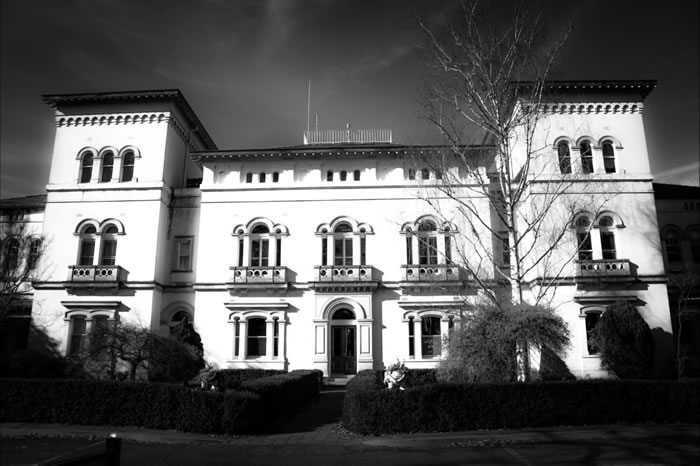
Whitaker eventually broke with Hamilton-Byrne. Financial difficulties and his growing doubts about the organisation contributed to the split, and he left Melbourne in 1970 to become psychiatric superintendent at Mayday Hills Psychiatric Hospital in Beechworth.
His psychedelic work did not end there.
LSD at Mayday Hills
A 2026 peer-reviewed study in the Journal of Australian Studies has brought new attention to Whitaker’s work at Mayday Hills.
Based on interviews with former staff and other historical material, the research documents a programme involving LSD and psilocybin during the early 1970s. The authors identify evidence of misconduct, unscientific methods and malpractice in aspects of Whitaker’s practice.
The psychedelic work took place alongside broader changes in Victorian psychiatry.
Whitaker was an advocate for psychotherapy at a time when large psychiatric hospitals were beginning to move away from highly institutional models of care. At Mayday Hills, former staff recalled efforts to give patients greater autonomy and reduce some of the rigid barriers that had traditionally defined institutional psychiatric treatment.
Whitaker was not simply an eccentric doctor experimenting with LSD. He was part of a wider movement attempting to rethink how psychiatric patients were treated.
There is no modern clinical dataset from Mayday Hills that can establish whether the LSD or psilocybin treatments were effective. The available evidence is largely historical and testimonial rather than the controlled clinical evidence expected today.
The 2026 research therefore leaves a mixed historical record: Whitaker was experimenting with treatments and models of psychiatric care that anticipated some ideas now being revisited, while his methods also exposed serious ethical and scientific problems.
The end of Australia’s first psychedelic era
By the mid-1970s, the legal therapeutic use of LSD in Victoria had effectively come to an end.
The psychedelic experiment that had begun in Australian psychiatric clinics more than a decade earlier was over.
What followed was a long period in which psychedelic drugs were largely excluded from mainstream psychiatric research.
Australia did not discover psychedelic medicine in 2023. It returned to a field that had existed decades earlier, under very different conditions.
Modern psychedelic medicine is being developed through regulated clinical trials, formal ethics processes, specialist training, controlled drug supply, patient screening, documented treatment protocols and regulatory oversight.
The contrast with Whitaker’s era is stark.
A complicated legacy
Whitaker’s early research was methodologically limited, but it was a genuine attempt to investigate whether LSD could have a place in psychiatric treatment.
He helped establish one of Australia’s first formal pathways for legal medical LSD use and was involved in the regulatory discussions surrounding it.
He also continued experimenting with psychedelics into the 1970s, at a time when psychiatric institutions were undergoing significant reform.
But his record includes serious regulatory failures and a deeply troubling association with The Family. The historical evidence indicates that LSD was used in settings and for purposes that went well beyond conventional psychotherapy, including spiritual manipulation and the treatment of people who were not necessarily psychiatric patients.
That record should not be romanticised.
Nor should Whitaker’s contribution to the history of Australian psychedelic psychiatry be erased.
The current psychedelic renaissance is often presented as a new frontier in medicine. In Australia, it is better understood as a second attempt to develop a field that was abandoned decades earlier.
The first attempt began in Melbourne more than 60 years ago, when psychiatrists including Howard Whitaker were asking whether LSD could change the way mental illness was treated.
They found reasons to believe it could.
They also left behind a record of what happened when promising but poorly understood treatments were developed without the scientific standards, ethical boundaries and regulatory systems expected of modern medicine.
Australia’s psychedelic history is not simply a story of a field that disappeared. It is part of the reason the field is being rebuilt differently today.