
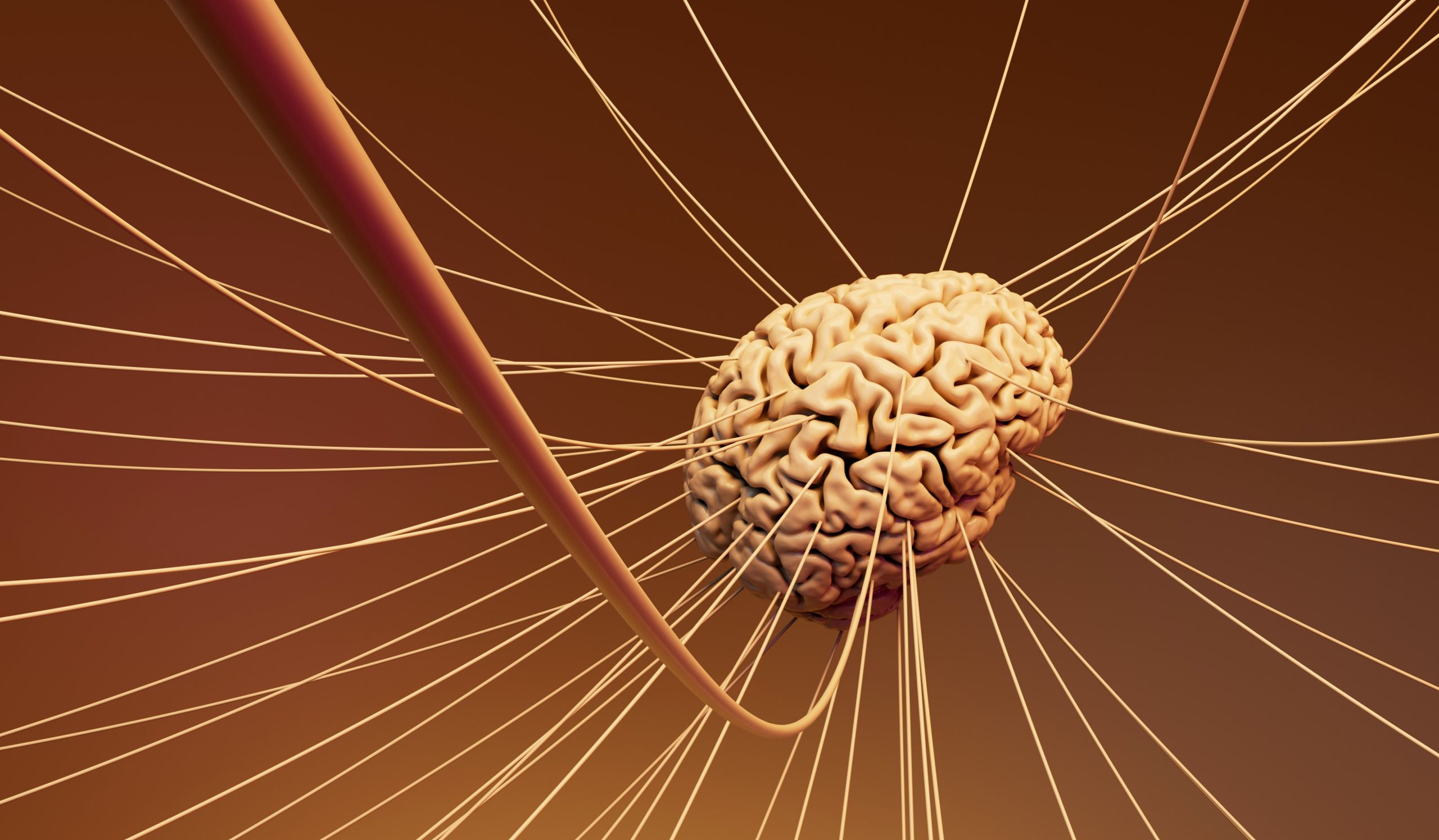

A large Australian study of the brain under psilocybin has found evidence of organisation within the neural changes that have often been described as psychedelic “chaos”.
Researchers from Monash University and international collaborators studied 62 healthy adults with no lifetime psychedelic experience. Participants underwent brain imaging and EEG before and after receiving psilocybin, while experiencing a range of conditions including rest, meditation, music and a naturalistic film.
The study, published in Nature, is the largest single-site acute psychedelic neuroimaging study reported to date.
Rather than only measuring whether particular brain regions became more or less connected, the researchers tracked how patterns of brain activity changed over time. This revealed a form of organisation that is difficult to see when brain activity is averaged across an entire session.
Under psilocybin, brain activity became more closely aligned with the context participants were experiencing.
Looking beyond psychedelic “chaos”
Research into psychedelics has consistently found major changes in brain connectivity.
Psilocybin reduces the usual separation between large-scale brain networks and increases communication between regions that do not normally interact as strongly. Other studies have also found increased entropy and desynchronisation, contributing to the idea that the psychedelic brain enters a more chaotic state.
The Monash researchers are not arguing that those findings are wrong.
Instead, their analysis suggests that there is another layer to what is happening.
Using machine learning to track changing patterns of brain activity, the researchers found that neural activity under psilocybin followed trajectories that reflected the context participants were in. The brain did not simply become less organised. Some of its normal organisational boundaries became weaker while activity became more closely related to what was happening around the person.
The effect also became stronger as the subjective intensity of the psychedelic experience increased.
The researchers found changes in global functional connectivity across different parts of the brain. During eyes-closed conditions, including rest, meditation and music, connectivity decreased in some sensory regions while increasing in associative regions. Global connectivity increased by as much as 72 per cent in some associative areas and decreased by up to 39 per cent in some sensory areas.
The pattern was different during the eyes-open film condition, where connectivity increased in both sensory and associative regions.
The usual difference between eyes-open and eyes-closed brain activity was also reduced. Under psilocybin, activity during eyes-closed conditions became more similar to activity normally associated with having the eyes open. This effect was observed using both fMRI and EEG.
The brain and its surroundings
The researchers found a connection between these changes in brain activity and the subjective experience of being less separate from the surrounding environment.
They use the term “embeddedness” to describe this experience, meaning a feeling of being continuous with rather than separate from the environment.
The stronger this experience was, the stronger the context-aligned organisation of brain activity tended to be.

The same relationship was seen with self-dissolution and boundary dissolution. Participants reporting stronger experiences of losing their usual sense of self or the boundary between themselves and their surroundings showed stronger context alignment in their brain activity.
The researchers found that these relationships were associated with positively felt experiences rather than simply reflecting unpleasant or disorientating effects of the drug.
The findings offer a possible biological explanation for why the environment surrounding a psychedelic experience can have such a significant influence on what happens during it.
Set and setting have been part of psychedelic research and practice for decades. The study suggests that this may have a measurable neural basis. If brain activity becomes more closely aligned with the context in which the psychedelic state is occurring, the music, surroundings, activity and other experiences during that period may become more relevant to the resulting experience.
What happens after the trip?
The study also found an association between context alignment during the psychedelic experience and changes in participants’ mindset the following day.
That does not establish a therapeutic effect. The study was not designed to test psilocybin as a treatment for depression, PTSD or another psychiatric condition, and the participants were healthy adults rather than a clinical population.
It does, however, provide a potential link between what happens in the brain during the acute psychedelic state and psychological changes that persist beyond it.
Whether the same neural patterns are involved in the longer-term changes reported in clinical psychedelic research remains an open question.
That will require studies designed specifically to follow people beyond the acute drug experience and connect changes in brain activity with longer-term psychological and clinical outcomes.
A different way of measuring the psychedelic brain
One of the more important aspects of the study is methodological.
Traditional neuroimaging approaches often look at average levels of connectivity between brain regions. That can make it difficult to capture a brain state that is constantly shifting.
The Monash team instead examined the movement between different patterns of brain activity. This allowed them to identify structure within the changing neural activity that was less apparent using conventional measures.
The result is a picture of the psychedelic brain that is more complicated than either “more connected” or “more chaotic”.
Psilocybin disrupts some of the brain’s normal divisions. At the same time, brain activity appears to become more closely tied to the context in which the experience is taking place.
The findings do not explain why psychedelic experiences can sometimes lead to lasting changes in mood, behaviour or outlook. They do suggest that what happens during the acute experience may be more structured, and more dependent on the surrounding environment, than conventional measures of psychedelic brain activity have indicated.
For psychedelic medicine, the next challenge is to establish whether this temporary shift in how the brain responds to context is simply part of the psychedelic experience, or whether it plays a role in the longer-lasting effects researchers are trying to understand.