
LSD occupies a uniquely complicated position in the history of psychedelic medicine. Few compounds have had such an outsized influence on psychiatry, neuroscience, culture and public perception, yet few have also carried the same degree of stigma and political baggage. Long before psilocybin became the industry’s preferred molecule for depression research, LSD had already established itself as both a promising psychiatric tool and a symbol of countercultural rebellion, shaping everything from psychotherapy to music, spirituality and political discourse.
That complicated history helps explain why LSD has remained somewhat overlooked during the current psychedelic renaissance. While psilocybin, MDMA and ketamine have dominated headlines, attracted investment and advanced through clinical development, LSD has often sat quietly in the background despite possessing one of the most intriguing pharmacological profiles in the field. This relative absence has rarely been about scientific potential. Instead, it has largely reflected the practical and commercial challenges of bringing LSD into modern clinical practice.
Unlike psilocybin, which generally produces a shorter therapeutic window, a full LSD experience can last anywhere from eight to twelve hours. That creates obvious challenges for clinics, trial sponsors and healthcare providers. Longer treatment sessions require more staff, greater clinical oversight and higher operating costs, all of which create friction in healthcare systems already under pressure.
The long duration, however, is not viewed solely as a disadvantage. Some researchers believe extended sessions may provide additional therapeutic opportunities by allowing patients and therapists more time to work through psychologically significant experiences. Whether that potential ultimately outweighs the practical challenges remains an open question.
Another reason for LSD’s resurgence is the broader maturation of psychedelic medicine itself. As regulators become increasingly familiar with evaluating psychedelic therapies on clinical evidence rather than historical stigma, companies are revisiting compounds that were once considered commercially impractical. The progress of programmes involving psilocybin and other psychedelics has helped establish regulatory pathways that may ultimately benefit multiple compounds, including LSD.
Recent developments suggest the molecule may now be moving back into serious clinical focus.
Behind the Tablet
Definium Therapeutics has placed LSD back in the spotlight after announcing positive Phase 3 results for DT120 ODT, its pharmaceutical formulation of LSD being developed for major depressive disorder.
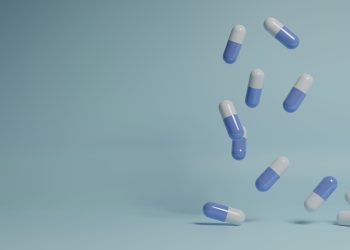
DT120 ODT is built around a relatively straightforward concept. ODT stands for orally disintegrating tablet, meaning the medicine dissolves in the mouth rather than being swallowed like a conventional tablet. The active ingredient is lysergide D-tartrate, the pharmaceutical salt form of lysergic acid diethylamide, better known as LSD.
That distinction is important. Many psychedelic biotechnology companies are pursuing modified compounds or next-generation analogues designed to shorten treatment duration or reduce psychedelic intensity. Definium has taken a different approach by developing a pharmaceutical-grade formulation of LSD itself.
The innovation is therefore less about creating a new psychedelic and more about transforming a historically controversial compound into a standardised medicine manufactured to pharmaceutical standards, delivered in controlled clinical settings and supported by structured treatment protocols.
Increasingly, companies are exploring whether regulatory success may come not only from novel molecules, but also from pharmaceutical formulations and delivery systems built around compounds whose therapeutic potential has been discussed for decades.
What the Data Shows
According to Definium, patients receiving DT120 demonstrated statistically significant improvements in depressive symptoms compared with placebo, with therapeutic benefits emerging rapidly and remaining durable throughout follow-up. If supported by further regulatory review and independent scrutiny, those findings would represent an important milestone for both LSD research and the broader psychedelic sector.
The implications are significant because major depressive disorder remains one of the largest unmet needs in global mental healthcare. Conventional antidepressants continue to play an important role, but response rates remain inconsistent, treatment-resistant depression remains common and many patients cycle through multiple medications before finding meaningful relief.
The promise of psychedelic-assisted therapy has always centred on the possibility that substantial psychological change may occur over a much shorter timeframe than conventional pharmacological treatment.
This is where LSD becomes particularly interesting. Its pharmacology differs meaningfully from both psilocybin and MDMA, particularly in its potency, duration and receptor activity. LSD exerts strong effects on serotonin receptors, especially 5-HT2A, which researchers believe plays a central role in psychedelic-induced changes to cognition, emotional processing and perception.
Many scientists believe these mechanisms may help disrupt rigid patterns of thinking associated with depression, anxiety and trauma, creating a therapeutic window in which patients can explore new psychological perspectives that may otherwise remain difficult to access.
While researchers are still working to fully understand these mechanisms, the emerging clinical evidence continues to strengthen interest in LSD’s therapeutic potential.
The Broader Research Landscape
Definium is not alone in advancing clinical research into LSD. MindMed has also pushed LSD-based therapy further into mainstream psychiatric discussion through its MM120 programme, particularly in anxiety disorders. Together, these programmes suggest that LSD may have therapeutic potential across multiple psychiatric conditions where entrenched cognitive patterns are central to disease.

Academic research has also provided increasingly detailed insights into how LSD affects the brain. Modern neuroimaging studies indicate the compound temporarily increases communication between brain networks that would normally operate more independently. Researchers believe this may help explain why psychedelic experiences can feel psychologically profound and, in some cases, produce lasting shifts in perspective.
For many clinicians and researchers, the most compelling aspect of psychedelic therapy is not simply symptom reduction but the possibility of creating durable psychological change through carefully supported treatment experiences.
Rather than relying on chronic daily medication, psychedelic medicine increasingly points towards episodic treatment delivered alongside preparation, psychotherapy and integration.
That represents a fundamentally different model of psychiatric care.
The Commercial Reality
Scientific promise alone will not determine whether LSD-based therapies succeed in clinical practice. Commercial viability, reimbursement, regulatory approval and operational scalability remain equally important.
This is where LSD continues to face meaningful hurdles.
Even with encouraging efficacy data, the duration of treatment remains one of the largest barriers to widespread adoption. Clinics require trained staff, dedicated treatment spaces and significant clinician time, creating economic challenges that cannot be ignored.
At the same time, strong and durable clinical outcomes could ultimately justify those costs for some patient populations, particularly individuals with treatment-resistant depression who have exhausted conventional treatment options.
The broader psychedelic sector is entering a stage where compelling science must translate into practical healthcare delivery. Investors, regulators and clinicians are increasingly focused not only on efficacy, but also on safety, reimbursement and sustainable models of care.
A Full Circle Moment
There is something deeply ironic about LSD’s re-emergence in modern psychiatry. Few substances have travelled such an extraordinary arc, from laboratory discovery to psychiatric research, from cultural revolution to criminalisation, and now potentially back into clinical medicine.
When Albert Hofmann first synthesised LSD in 1938 while researching ergot derivatives, it is difficult to imagine he could have predicted the influence the molecule would have on science, medicine and society.
Nearly ninety years later, the question is no longer whether LSD possesses profound psychological effects. That has been evident for decades.
The more important question is whether modern medicine can harness those effects safely, responsibly and within evidence-based models of care.
Early clinical results suggest that possibility deserves serious consideration.
If ongoing research continues to support the current findings, LSD may ultimately move beyond its legacy as a symbol of counterculture and reclaim a role many early psychiatric researchers believed it was capable of occupying: not as a historical curiosity, but as a legitimate therapeutic option within modern mental healthcare.
For a compound that has spent decades defined by its past, that may prove to be its most remarkable chapter yet.