
The modern psychedelic renaissance is often framed through the lens of clinical legitimacy. Today, psilocybin is being studied at world-leading universities, MDMA is nearing regulatory pathways in multiple jurisdictions, and serious capital is flowing into psychedelic biotechnology. But beneath this institutional momentum lies a far more complex history, one shaped not only by researchers and clinicians, but also by underground chemists, political dissidents, and controversial figures who operated far beyond the reach of public approval.
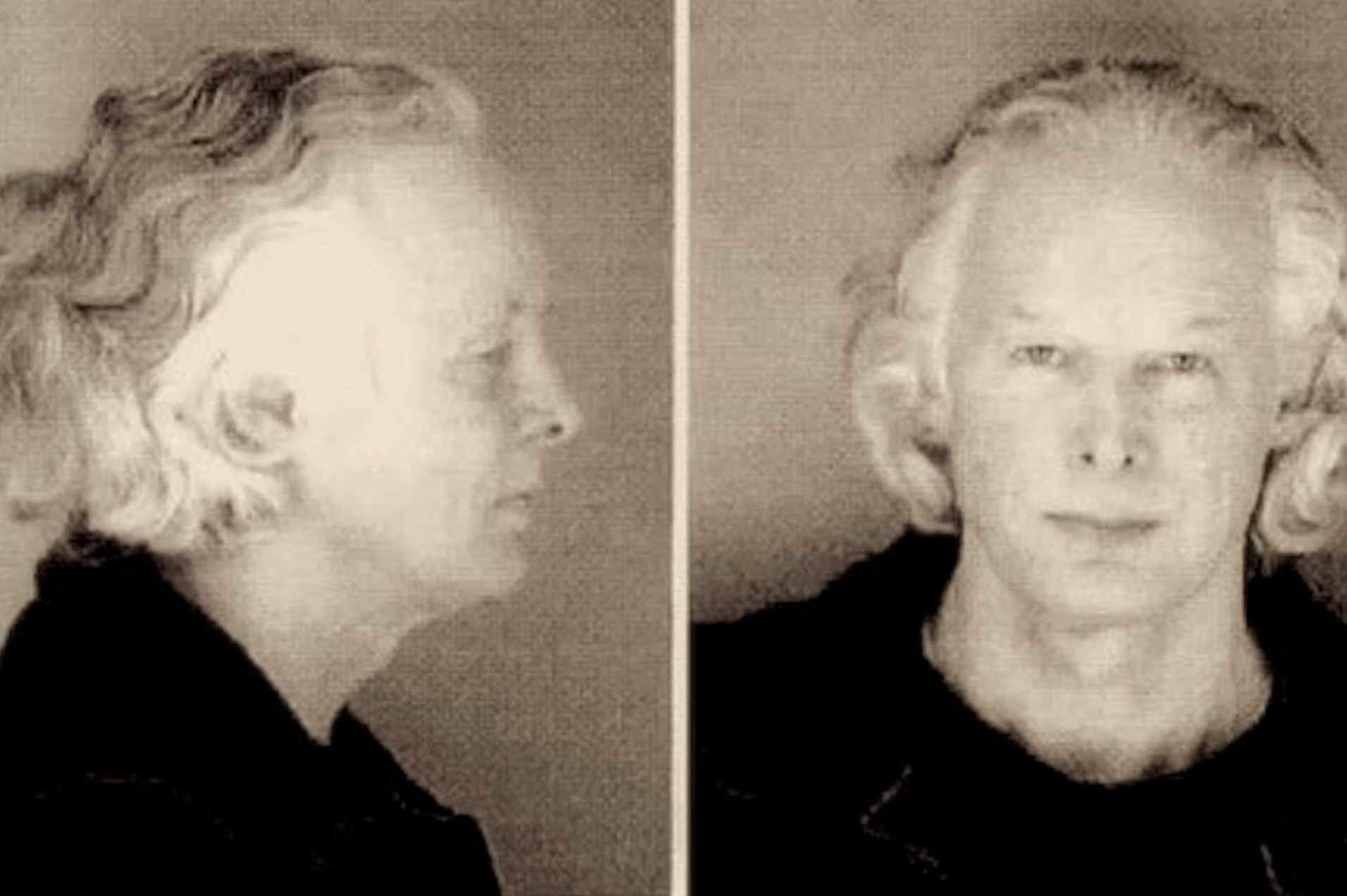
Few figures embody that contradiction more than William Leonard Pickard.
To some, Pickard is one of the most significant underground chemists in psychedelic history, a brilliant but deeply polarising figure who helped sustain global LSD supply during the harshest decades of prohibition. To others, he is simply a highly sophisticated criminal whose actions reflected the dangers of large-scale illicit manufacturing.
Whichever interpretation one accepts, Pickard’s story occupies a unique place in the history of psychedelics. His life sits at the intersection of elite academia, clandestine chemistry, public policy, and the global War on Drugs.
It is a story that forces uncomfortable but important questions. Who controls access to consciousness-altering compounds? How should history judge those who preserved psychedelic substances during prohibition? And what role did underground networks play in making today’s psychedelic renaissance possible?
William Leonard Pickard was born in 1945 in Georgia, entering a world shaped by post-war scientific optimism and Cold War paranoia. By all accounts, he was exceptionally intelligent from an early age. His academic ability earned him entry into Princeton University during the early 1960s, a period when American culture was beginning to fracture under political tension, anti-war sentiment, and the rise of countercultural experimentation.
But Pickard’s path quickly diverged from conventional academic life.
After a brief period at Princeton, he moved west to California, placing himself in the epicentre of the psychedelic revolution. The San Francisco Bay Area had become a laboratory of social and chemical experimentation. LSD was rapidly evolving from a psychiatric research compound into the defining sacrament of a cultural movement.
It was during this period that Pickard became immersed in the emerging psychedelic underground. He developed deep expertise in chemistry and pharmacology and became associated with influential figures in psychedelic science, including Alexander Shulgin, whose work would later shape much of modern psychedelic pharmacology.
Yet Pickard was never a stereotypical counterculture figure.
Unlike many of his contemporaries, he remained deeply engaged with formal institutions. In what would become one of the great contradictions of his life, he later entered Harvard University’s John F. Kennedy School of Government to study public policy, focusing on narcotics control and drug policy analysis.
This duality would define him.
By the 1980s and 1990s, Pickard had established credibility in academic and policy circles. He worked in drug research and policy environments, interacting with public health officials, researchers, and institutions attempting to understand illicit drug markets. He developed a sophisticated understanding of global drug supply chains, behavioural trends, and policy failures.
At the same time, federal authorities believed he was operating within the very underground chemical networks those institutions were trying to study.
Manufacturing LSD is not comparable to producing most other illicit substances. It is among the most technically demanding processes in synthetic chemistry, requiring highly specialised equipment, tightly controlled conditions, and access to difficult-to-obtain precursor compounds.
It is chemistry operating at an elite level.
The extraordinary potency of LSD adds another layer of complexity. A tiny quantity can produce an enormous number of doses. One gram of crystal LSD can yield approximately 10,000 individual doses, making industrial-scale production capable of supplying vast markets with relatively small physical volumes.
This reality made skilled chemists extraordinarily important within the underground psychedelic ecosystem.
Pickard first came to major law enforcement attention in 1988 when authorities raided a sophisticated laboratory in Mountain View, California. He was convicted on drug manufacturing charges and served time in federal prison.
For many, that would have ended the story.
It did not end Pickard’s.
Following his release, authorities alleged he resumed operations at a much larger scale, moving through multiple states while maintaining a low profile. By the late 1990s, the operation had allegedly become one of the most significant clandestine LSD manufacturing networks in the world.
The climax of this story feels almost fictional.
In the late 1990s, Pickard and associate Clyde Apperson began operating out of one of the most unusual locations in modern drug enforcement history: a decommissioned Atlas missile silo near Wamego, Kansas.
Originally designed during the Cold War to survive catastrophic attack, the underground silo offered extraordinary isolation and security. Thick concrete walls, subterranean chambers, and remote geography made it a uniquely attractive environment for covert activity.
It was also where everything began to unravel.
The silo was owned by Gordon Todd Skinner, an eccentric and volatile figure with deep connections to the underground drug world. As legal pressure mounted around unrelated criminal allegations, Skinner made a decision that would change psychedelic history.
He cooperated with the DEA.
In 2000, federal agents moved in.
When Pickard and Apperson attempted to relocate laboratory equipment from the silo, law enforcement intercepted them near Wamego. Both were arrested after one of the most infamous operations in DEA history.
The case that followed became legendary.
Federal prosecutors alleged Pickard’s organisation had produced the majority of the global illicit LSD supply. The DEA claimed the dismantling of the operation resulted in a dramatic collapse in worldwide LSD availability, a figure often cited as a 90 to 95 percent reduction.
That claim remains debated.
Many drug policy researchers argue the figure was overstated, pointing to the difficulty of accurately measuring global illicit supply. Yet even critics acknowledge that LSD availability fell sharply in the early 2000s. Within underground communities, the period became widely known as the “acid drought.”
Regardless of the precise percentage, the impact was substantial.
Pickard’s trial became a major symbolic moment in the War on Drugs. Prosecutors portrayed him as one of the most consequential clandestine chemists in modern history. His defence challenged key aspects of the prosecution narrative, but the scale of the allegations and evidence proved overwhelming.
In 2003, Pickard was sentenced to two life terms plus 20 years without parole.
The sentence was extraordinary even by federal drug enforcement standards.
For the state, the message was clear. Pickard represented a major target in America’s war against illicit drugs, and the punishment reflected the scale of that objective.
Yet prison did not end his intellectual work.
During two decades of incarceration, Pickard continued writing and researching. He studied illicit supply systems, analysed the opioid epidemic, and maintained correspondence with academics and researchers. His insights into drug markets, public policy failures, and synthetic supply chains remained highly regarded by some within policy and research circles.
During this period, he also wrote The Rose of Paracelsus, a sprawling philosophical and autobiographical work that deepened his mythological status within psychedelic culture.
To supporters, the book reinforced his image as a philosopher-scientist caught in the machinery of prohibition. To critics, it added to the romanticisation of a deeply controversial figure.
Then came 2020.

The world had changed dramatically since Pickard’s arrest. Psychedelics were no longer confined to underground networks. Major institutions including Johns Hopkins, Imperial College London, and UC Berkeley had helped legitimise serious psychedelic research. Investors were backing biotechnology companies developing regulated psychedelic therapeutics. Compounds once demonised as dangerous countercultural substances were now being examined as potential breakthroughs in mental health treatment.
Against this backdrop, Pickard’s sentence increasingly drew scrutiny.
In July 2020, amid the COVID-19 pandemic and growing health concerns within US prisons, a federal court granted compassionate release. After serving approximately twenty years, Pickard walked free.
His release carried symbolic weight far beyond the individual case.
It represented a collision between two eras of psychedelic history: prohibition and legitimacy.
Today, William Leonard Pickard remains one of the most controversial figures in psychedelic culture. Some see him as a criminal mastermind whose actions endangered public safety. Others view him as an underground custodian who helped preserve psychedelic compounds during decades when mainstream science and medicine abandoned them.
The truth, as is often the case, is likely more complicated than either narrative allows.
What is undeniable is Pickard’s historical significance.
His life reflects the strange, often uncomfortable evolution of psychedelics from forbidden compounds to legitimate therapeutic tools. It highlights the tension between underground preservation and institutional acceptance, between criminal law and scientific inquiry, between prohibition and progress.
As the psychedelic industry matures, stories like Pickard’s become increasingly important to understand.
Not because they offer easy moral conclusions, but because they reveal the complicated foundations upon which today’s industry has been built.
The modern psychedelic renaissance did not emerge from clinical trials alone. It was shaped by decades of scientific curiosity, cultural resistance, underground networks, and individuals willing to operate in legally and ethically ambiguous territory.
William Leonard Pickard stands as one of the most compelling figures in that history.
A chemist. A policy researcher. A criminal defendant. A philosopher. A symbol.
And perhaps most importantly, a reminder that the history of psychedelics has never been simple.