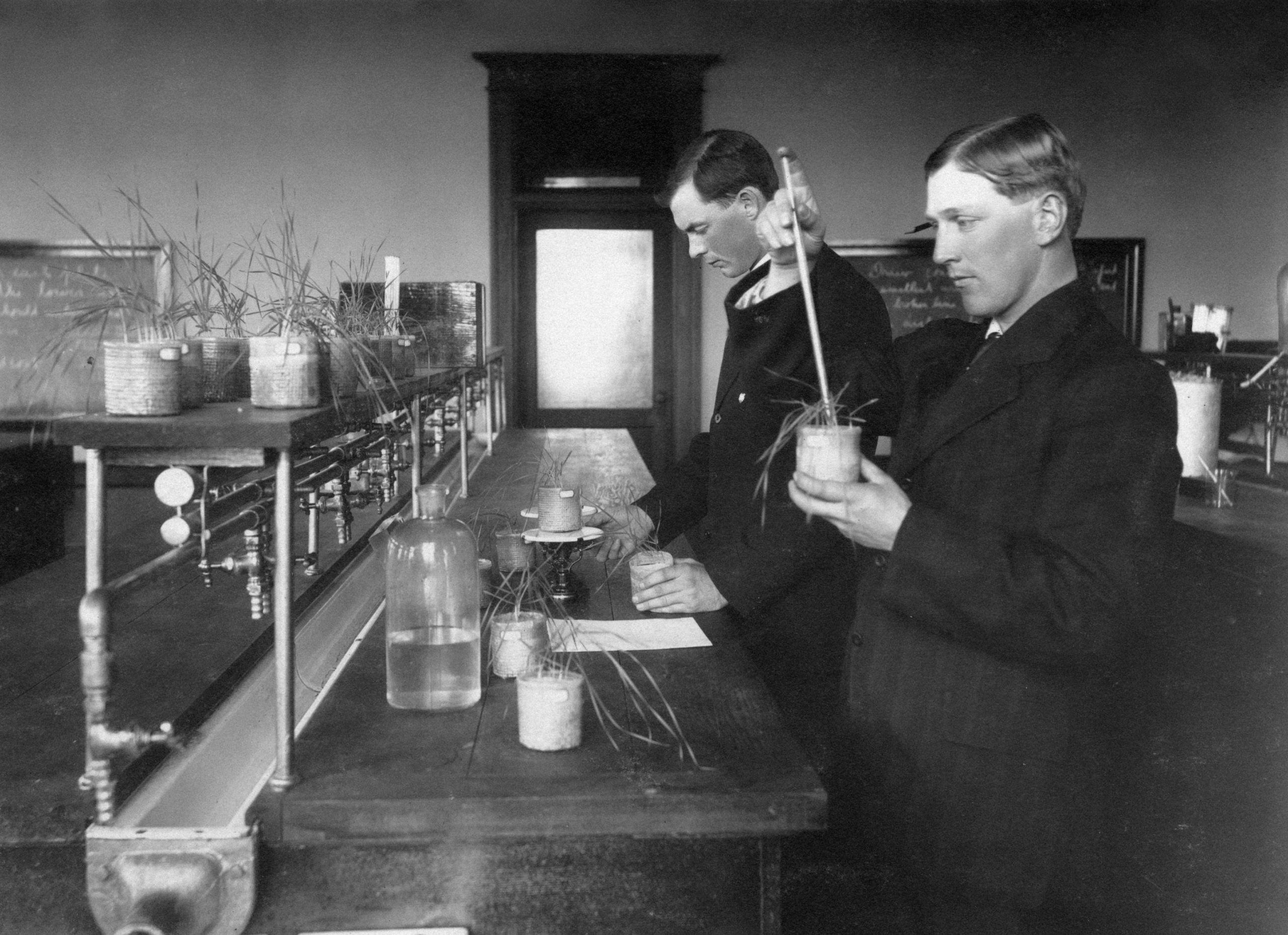

In 1962, an American chemist quietly created an experimental compound in a laboratory at Parke, Davis & Company. It was designed to solve a problem with another anaesthetic. Instead, it would go on to transform surgery, emergency medicine, pain management and, decades later, psychiatry itself.
The chemist was Calvin Lee Stevens.
His assignment was deceptively simple: develop a safer alternative to phencyclidine (PCP), a powerful anaesthetic that had shown promise in surgery but frequently caused prolonged hallucinations, delirium and distressing psychological side effects during recovery.
The experimental compound Stevens synthesised was known internally as CI-581.
The world would later know it simply as ketamine.
Over the following two years, pharmacologist Dr Edward Domino and anaesthesiologist Dr Guenter Corssen conducted the first human clinical studies. They discovered that ketamine produced an entirely new form of anaesthesia. Rather than rendering patients completely unconscious, it created a unique dissociative state while generally preserving spontaneous breathing, protective airway reflexes and cardiovascular stability.
Domino coined the term “dissociative anaesthesia,” a phrase that remains synonymous with ketamine more than sixty years later.
In 1970, the US Food and Drug Administration approved ketamine as an anaesthetic, and its clinical advantages quickly became apparent.
Unlike many anaesthetic agents available at the time, ketamine generally maintains blood pressure, heart function and spontaneous breathing. These characteristics made it particularly valuable in trauma care, emergency medicine and critically ill patients where other anaesthetic agents could pose greater risks. During the Vietnam War, it became widely used by military medical teams because it could be administered safely under difficult battlefield conditions.
By the 1980s, ketamine had become one of the world’s most versatile hospital medicines.
Today, it is administered every day in operating theatres, emergency departments, ambulance services, intensive care units and veterinary hospitals across the globe. Clinicians use it to induce and maintain anaesthesia, provide procedural sedation, stabilise critically injured trauma patients and support patients whose medical condition makes other anaesthetic agents less suitable.
It has also become an increasingly important medicine in pain management.
Anaesthetists frequently administer low-dose ketamine during and after major surgery—including complex orthopaedic, abdominal, spinal and cancer procedures—to reduce postoperative pain while lowering the amount of opioid medication patients require during recovery. In specialist pain clinics, ketamine is also used in carefully selected patients suffering from severe chronic pain conditions that have failed to respond to conventional therapies.
Today, ketamine is listed on the World Health Organization’s List of Essential Medicines and is licensed for medical use in more than 100 countries—a reflection of its importance to modern healthcare.
Few medicines have demonstrated such remarkable versatility across so many areas of medicine.
For almost three decades, however, ketamine was regarded primarily as an anaesthetic and analgesic.
Few imagined it had another life beyond the operating theatre.
Then a small group of researchers began asking a radically different question.
What if this anaesthetic could treat depression?
In 2000, researchers at Yale University published the first placebo-controlled clinical trial demonstrating that a single low-dose intravenous infusion of ketamine could rapidly reduce symptoms of major depression. Although the study involved a relatively small number of patients, the findings challenged one of psychiatry’s longest-held assumptions—that antidepressants required weeks before producing meaningful clinical improvement.
Ketamine appeared capable of working within hours.
The discovery surprised many scientists.
Unlike conventional antidepressants, which primarily target serotonin, ketamine acts on the brain’s glutamate system. Researchers now believe this may rapidly enhance neuroplasticity—the brain’s ability to form and strengthen neural connections—helping explain why some patients experience improvements far more quickly than with traditional antidepressant medications.

Many scientists were intrigued.
Others remained sceptical.
The turning point came in 2006.
Psychiatrist Dr Carlos Zarate Jr. and colleagues at the US National Institute of Mental Health (NIMH) published a landmark clinical trial involving patients with treatment-resistant depression. The study demonstrated that a single ketamine infusion produced rapid and significant antidepressant effects in many patients who had failed multiple conventional therapies.
For much of the psychiatric community, this was the moment ketamine ceased being an interesting scientific observation and became a legitimate therapeutic breakthrough.
The implications extended far beyond a single medicine.
For decades, antidepressant development had focused largely on serotonin, noradrenaline and dopamine. Ketamine pointed researchers towards an entirely different biological pathway while highlighting the importance of glutamate signalling and neuroplasticity in treating depression.
The discovery ignited an explosion of scientific research.
Thousands of peer-reviewed papers followed. Universities established dedicated ketamine research programs. Pharmaceutical companies invested billions of dollars developing glutamate-based medicines, while specialist ketamine clinics began opening across North America, Europe, Australia and New Zealand.
In 2019, the US Food and Drug Administration approved esketamine, a ketamine-derived nasal spray, for treatment-resistant depression following multiple successful Phase 3 clinical trials. It became the first antidepressant with a fundamentally new mechanism of action to reach the market in decades, validating years of research that began with a small experimental study at Yale.
Today, ketamine occupies a unique position in global healthcare.
Unlike most medicines associated with the psychedelic renaissance, ketamine is already firmly embedded within mainstream medicine. Across Australia, New Zealand, the United Kingdom, Europe, North America and much of Asia, it is administered millions of times every year as an anaesthetic, sedative and analgesic. It remains indispensable in surgery, trauma care, emergency medicine, intensive care and pain management.
At the same time, an increasing number of specialist psychiatric services now provide carefully regulated ketamine treatment for patients with severe mental health conditions who have exhausted conventional treatment options.
Few medicines have travelled such an extraordinary path.
Stevens almost certainly never imagined that the molecule he synthesised would one day become associated with mental health treatment. His goal was simply to create a safer anaesthetic than PCP. Yet decades later, the same compound would become one of the most intensively studied psychiatric medicines in history—a reminder that some of medicine’s greatest breakthroughs emerge from entirely unexpected places.
More than sixty years after Calvin Stevens quietly synthesised an obscure laboratory compound, ketamine continues to reshape medicine in ways few scientists could ever have imagined.
He set out to create a better anaesthetic.
Instead, he helped change modern medicine forever.