
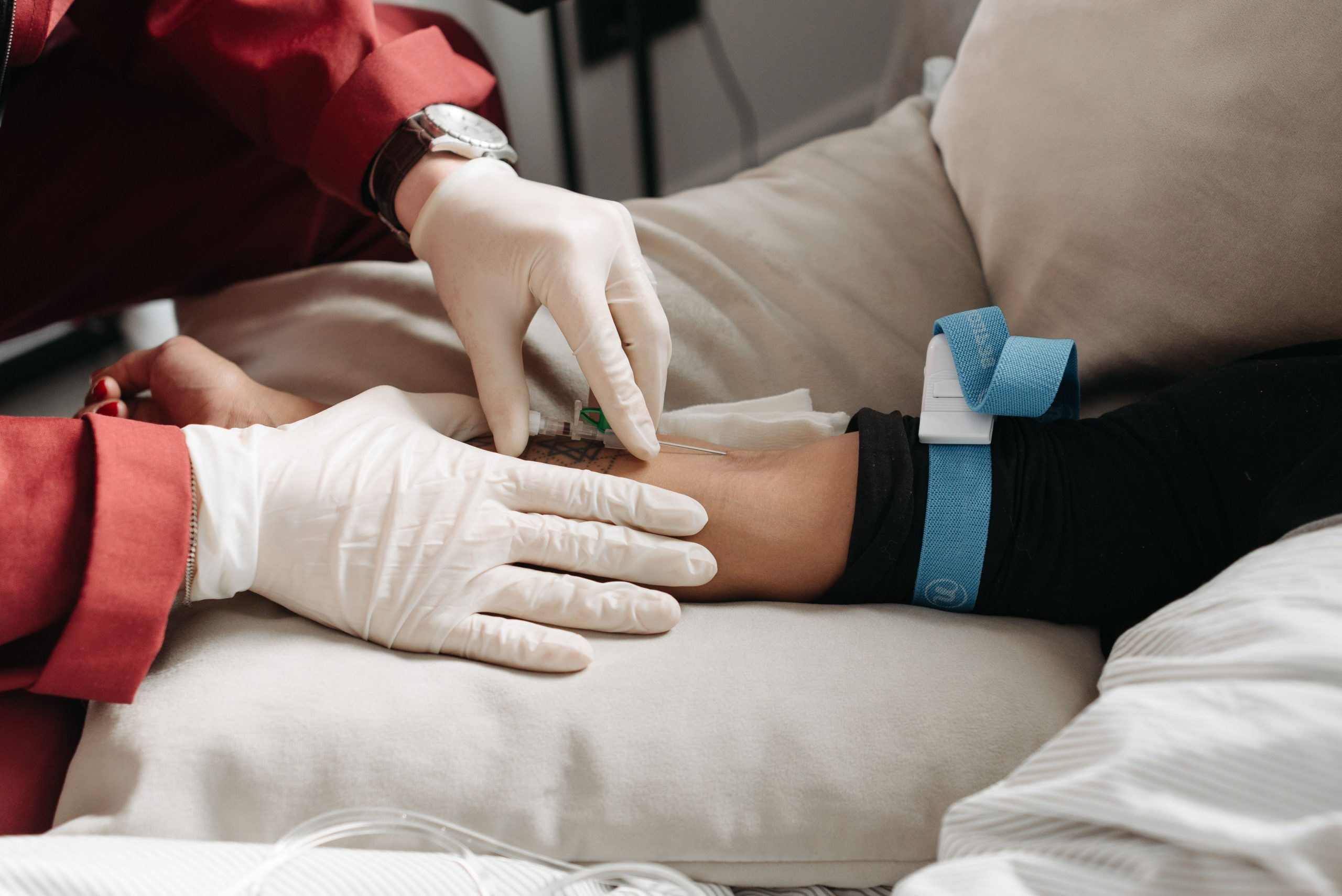

Melbourne-based Entropy Neurodynamics is advancing an intravenous psilocin programme spanning binge eating disorder, depression and other neuropsychiatric conditions, with recent clinical results and a proposed US trial bringing its approach into sharper focus.
The company, formerly known as Tryptamine Therapeutics and listed on the ASX as ENP, is developing TRP-8803, a proprietary intravenous formulation of psilocin, the active metabolite of psilocybin. Its approach centres on controlling the dose and duration of the psychedelic experience, giving clinicians the ability to adjust an infusion during treatment rather than relying on a fixed oral dose.
The proposition addresses a practical challenge in psychedelic medicine. Oral psilocybin has to be processed by the body before producing its effects, and the timing and intensity of the experience can vary. Intravenous administration offers a different way to manage exposure, although whether that translates into better clinical outcomes, shorter appointments or lower treatment costs remains to be established.
Early results in binge eating disorder
In September 2026, Swinburne University of Technology reported 12-week follow-up results from a pilot study involving six people with treatment-resistant binge eating disorder. Participants received two TRP-8803 treatments, alongside the clinical support provided as part of the programme.
Across the group, binge-eating episodes were 73% lower than at baseline after 84 days. Three of the six participants reported no binge-eating episodes throughout the follow-up period. The university also reported reductions in anxiety and depression of 50% and 42%, respectively, alongside a 61% improvement in quality of life.
Swinburne
+1
These results are encouraging as an early clinical signal, particularly given the persistence of symptoms in the study population. However, six participants cannot establish the treatment’s efficacy, and the reported changes across several measures should not be interpreted as evidence that TRP-8803 will produce comparable results in a larger or more diverse population.
The study is part of Entropy’s broader effort to establish whether controlled intravenous delivery can be used across multiple conditions, rather than being developed for a single psychiatric indication.
A broader clinical programme
In August, Entropy received ethics approval for a 72-patient Phase 1b/2a basket study involving eight neuropsychiatric indications. A basket design allows investigators to examine a treatment across several conditions within a broader clinical programme, potentially helping identify where further development may be warranted.
The programme will provide additional information about the safety, tolerability and potential clinical effects of TRP-8803 across different patient groups. It will also give the company more evidence to inform decisions about which indications merit larger, more targeted trials.
The breadth of the programme is relevant to Entropy’s longer-term commercial strategy, but it also introduces a substantial development challenge. Results across different conditions, patient populations and outcome measures will need to be interpreted carefully, and any indication selected for later-stage development will require evidence specific to that condition.
Manufacturing moves into focus
Entropy’s August agreement with Australian contract development and manufacturing organisation BioCina is another important part of the programme.
Under the Development and Manufacturing Services Agreement, BioCina will manufacture GMP-grade TRP-8803 to support clinical development, including the company’s proposed US programme. GMP manufacturing is a necessary component of pharmaceutical development, providing controls around the production process, quality and consistency of material used in clinical trials.
26 Aug 2026
The agreement gives Entropy access to specialist manufacturing capabilities as it progresses beyond early clinical work. It does not, by itself, establish that the formulation can be manufactured commercially at scale or that production costs will support a viable treatment model.
For a therapy that may require supervised administration, manufacturing is only one part of the eventual delivery equation. The economics will also depend on infusion time, clinical staffing, monitoring, psychotherapy requirements and how frequently patients need treatment.
A proposed US trial against an established antidepressant
Entropy’s most notable recent development is its proposed Phase 2 study with the University of California, San Francisco (UCSF).
Announced on 26 August, the proposed trial would compare TRP-8803 with escitalopram, a widely prescribed selective serotonin reuptake inhibitor, in up to 80 young adults with major depressive disorder. Entropy has signed a pre-Clinical Trial Agreement with UCSF to develop the study, with commencement targeted for the first half of 2027, subject to FDA clearance and completion of the necessary agreements.
26 Aug 2026
A comparison with an established antidepressant could help researchers examine differences between two substantially different treatment approaches. Escitalopram is generally taken daily, while Entropy is investigating whether a limited number of supervised psychedelic treatments can produce benefits that persist beyond the dosing sessions.
The proposed study will need to establish its methodology, including how outcomes are measured and how the two treatment approaches are compared. A trial of up to 80 participants would still be relatively small, and its findings would not, on their own, establish the comparative effectiveness of the treatments across the wider population with depression.
The UCSF programme also has a potential role beyond the immediate depression study. Entropy says the US regulatory work could provide a foundation for subsequent clinical development, subject to the relevant approvals and evidence generated by its ongoing programme.
The question of clinical practicality
The appeal of TRP-8803 rests partly on the possibility of making the psychedelic experience more manageable in a clinical setting.
With an intravenous formulation, clinicians can adjust the rate of administration and stop an infusion if necessary. Entropy says this provides greater control over the onset, intensity and duration of the experience than oral dosing. These are pharmacological and operational characteristics that can be investigated directly, rather than assumed to produce better therapeutic outcomes.
There are trade-offs. Intravenous treatment requires trained staff, appropriate facilities and monitoring, while psychedelic-assisted treatment may also involve substantial preparation and psychological support. The ability to shorten or control the drug’s effects will matter commercially only if it can be shown to improve the overall treatment process without compromising safety or outcomes.
The distinction is particularly important as psychedelic medicine moves into more demanding stages of pharmaceutical development. Demonstrating a response in a small study is one milestone; establishing a reproducible treatment protocol, a suitable manufacturing process and a workable model of care is a much larger undertaking.
What comes next for Entropy
Over the coming year, Entropy’s development programme should provide further evidence about the potential and limitations of its approach. The company’s multi-indication study, continued work in binge eating disorder, manufacturing arrangements with BioCina and proposed UCSF trial each address a different part of the development process.
The immediate clinical priority is to establish whether the early signals in binge eating disorder can be replicated and whether TRP-8803 can demonstrate acceptable safety and meaningful outcomes in larger studies. The broader programme will also need to identify which indications have sufficiently strong evidence and a credible pathway towards further development.

For Australia’s psychedelic medicine sector, Entropy offers a case study in the work required to move beyond the initial therapeutic promise of psychedelics. Its programme combines drug formulation, clinical research, manufacturing and an attempt to establish an international development pathway.
Whether intravenous psilocin becomes a practical treatment option will depend on evidence that extends well beyond the ability to control an infusion. Entropy’s next studies will help determine whether that control can translate into a treatment that is effective, safe and workable within the realities of clinical care.