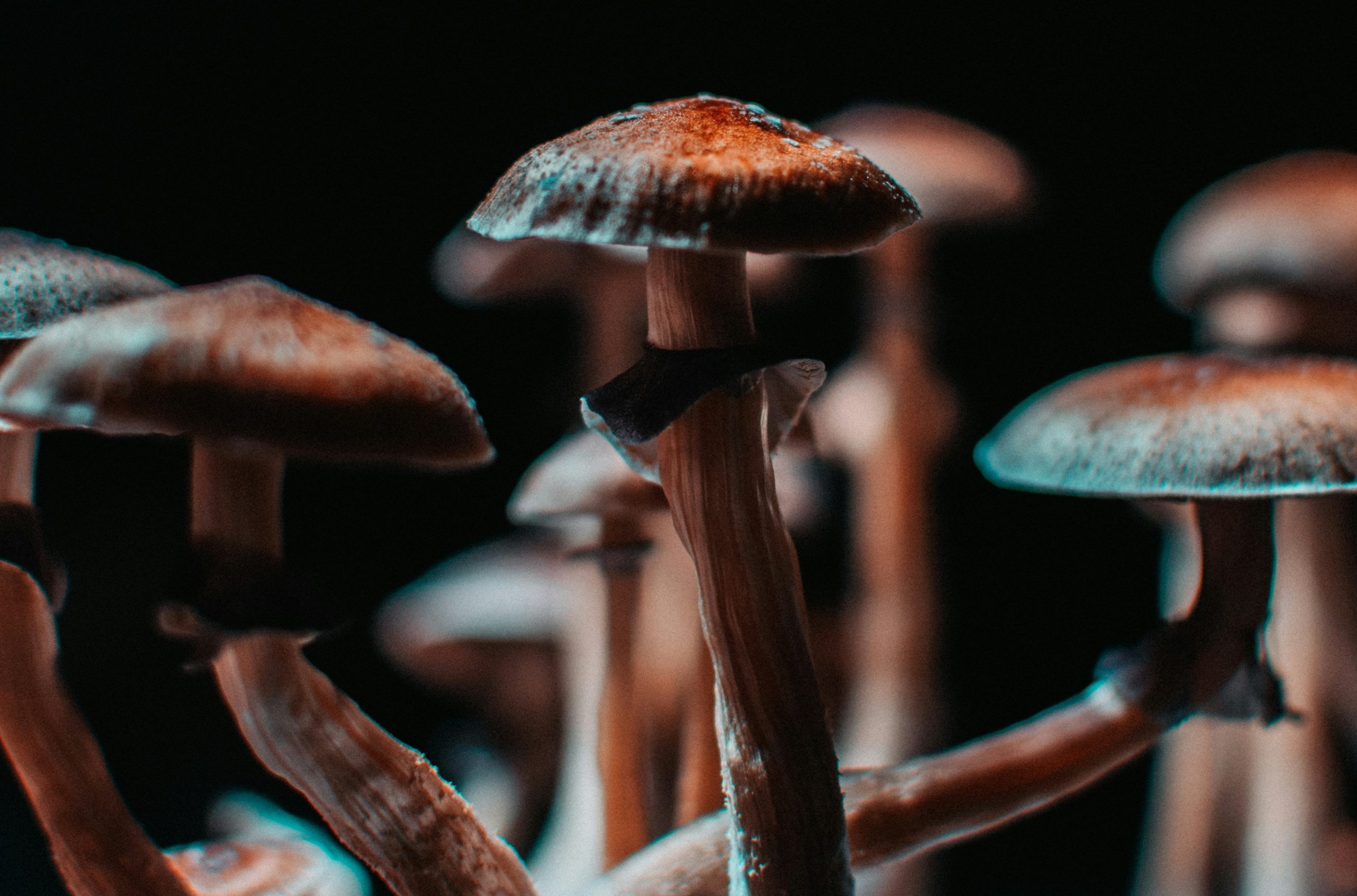

A growing group of companies is developing pharmaceutical-grade psilocybin from mushrooms, creating the infrastructure needed to investigate whether the broader chemistry of Psilocybe could have a role in psychedelic medicine.
For much of the modern psychedelic medicine industry, psilocybin has effectively meant a single molecule. Synthetic psilocybin is chemically defined, highly reproducible and relatively straightforward to formulate into a pharmaceutical product, making it the dominant form used in clinical research. Researchers know exactly what is being administered, manufacturers can establish tightly controlled production processes and regulators can assess a product with a clearly defined composition.
That model is now being challenged by a small but increasingly sophisticated group of companies developing pharmaceutical-grade psilocybin from mushrooms.
The natural psilocybin sector remains tiny compared with the conventional pharmaceutical industry, but its significance is growing as companies develop controlled cultivation, extraction, analytical testing and GMP manufacturing capabilities.
The objective is not simply to grow psychedelic mushrooms at scale. It is to turn a biologically variable organism into a reproducible pharmaceutical starting material capable of meeting the quality and regulatory requirements expected of conventional medicines.
That distinction opens up a broader scientific question: if mushrooms contain psilocybin alongside a range of other naturally occurring tryptamines, does that wider chemical profile have any meaningful effect on the medicine, or is purified psilocybin ultimately all that matters?
The industry does not yet have an answer. What has changed is that companies are beginning to build the manufacturing infrastructure required to investigate the question properly.
The companies building the natural supply chain
“Natural psilocybin producer” can describe several different business models. Some companies cultivate Psilocybe mushrooms, while others specialise in extraction and pharmaceutical manufacturing using mushroom-derived material. Others are developing standardised botanical formulations intended to preserve a defined profile of naturally occurring compounds rather than isolate psilocybin completely.
Canada’s Optimi Health is one of the clearest examples of a company attempting to control a substantial portion of this supply chain.
The company cultivates mushroom biomass in British Columbia and operates GMP pharmaceutical manufacturing facilities in Princeton. In 2026, Optimi announced the export of naturally derived psilocybin to the United Kingdom for clinical research and has also supplied natural psilocybin capsules into Australia through the country’s Authorised Prescriber framework.
Optimi’s development programme is particularly relevant because it is not simply treating naturally occurring mushrooms as a source of psychedelic material. The company has been developing a controlled cultivation programme, building a library of mushroom genetics and working to increase the concentration and consistency of its natural psilocybin extracts.
In September 2026, the company announced plans for a Phase II clinical study of its naturally derived psilocybin in major depressive disorder, with the trial expected to involve up to 200 participants.
That transition from cultivation into controlled clinical development is significant for the sector. The commercial proposition ultimately depends not on whether mushrooms can be grown, but whether a mushroom-derived product can deliver the quality, consistency and clinical evidence required of a medicine.
PsyLabs occupies a different position in the supply chain. The company focuses on naturally derived psilocybin and pharmaceutical manufacturing, supplying natural psilocybin to Psyence BioMed for its clinical development programme.
In March 2026, Psyence announced the export of GMP-manufactured natural psilocybin to Australia for its Phase IIb programme investigating psilocybin-assisted therapy in people experiencing cancer-related adjustment disorder.
The significance of the Psyence programme is that natural psilocybin is being taken into a controlled clinical development programme rather than remaining a theoretical alternative to synthetic material. The challenge is to establish whether a naturally derived formulation can be manufactured consistently enough, and administered precisely enough, to support late-stage clinical research.
Jamaica’s JMCC Group is pursuing another model.
The company cultivates Psilocybe mushrooms in Jamaica under controlled agricultural conditions and has established pharmaceutical processing and manufacturing capabilities in Malta. Its model separates cultivation and pharmaceutical manufacturing geographically, with mushroom biomass produced in Jamaica before subsequent processing, extraction, testing and pharmaceutical manufacture in Europe.
That approach could become increasingly relevant as the industry develops. There is no fundamental requirement for cultivation and pharmaceutical manufacturing to occur in the same country, provided the agricultural, quality, import, manufacturing and regulatory requirements governing the supply chain can be satisfied.
Filament Health, now part of Rhelion Life Sciences, represents another variation.
Its PEX010 programme is based on a standardised botanical psilocybin drug candidate rather than conventional synthetic psilocybin. The company has positioned botanical extraction as a way of producing pharmaceutical preparations from natural fungal material while maintaining a controlled and reproducible composition.
Filament’s significance therefore lies less in large-scale mushroom cultivation and more in the pharmaceutical technology used to transform natural source material into a standardised product.
Australia is becoming an important testing ground
Australia provides an unusually interesting regulatory environment for natural psilocybin because its framework distinguishes plant-derived and synthetic psilocybin while establishing quality requirements for both.
The Therapeutic Goods Administration’s current framework permits plant-derived psilocybin sourced from Psilocybe cubensis, subject to the relevant regulatory requirements. The TGA also distinguishes between cultivation and pharmaceutical manufacturing. For psilocybin derived from P. cubensis, manufacturing under the therapeutic-goods framework begins after cultivation and drying, while cultivation itself falls under applicable state and territory requirements.
The distinction illustrates the structure emerging around natural psilocybin. Growing the mushroom is an agricultural activity; turning the resulting biomass into a consistent pharmaceutical product involves extraction, analytical testing, manufacturing controls and GMP.
The TGA’s quality requirements are particularly relevant to the debate over broader mushroom preparations because plant-derived extracts must meet defined specifications. Where other tryptamines are relevant to a product, they need to be identified and controlled rather than simply allowed to vary between batches.
For a commercial natural-psilocybin manufacturer, that creates a considerably more complex problem than simply cultivating mushrooms. Companies need sufficient understanding of their genetics, cultivation conditions and resulting chemical profiles to produce reproducible pharmaceutical material.
The variability problem
This is one of the central challenges facing natural psilocybin.
Mushrooms are biological organisms, and their chemistry can vary according to genetics, cultivation conditions, maturity and processing. A 2026 study examining 14 Psilocybe cubensis strains under controlled cultivation conditions found substantial variation in total tryptamine concentrations, with more than a sevenfold difference between the strains examined.
The researchers identified psilocybin as the dominant compound but also detected psilocin, baeocystin, norbaeocystin, aeruginascin and norpsilocin.
For pharmaceutical development, that variability matters. A company cannot reliably produce a medicine if its active chemical profile changes substantially between batches.
This is why the emerging GMP cultivation industry is more significant than the term “mushroom grower” suggests. Companies entering the sector are attempting to establish reproducible genetics, controlled cultivation protocols, defined harvesting procedures and analytical methods capable of characterising biomass before it enters pharmaceutical production.
Their competitive position will ultimately depend on how effectively they control the chain from genetics and cultivation through strain selection, analytical chemistry, extraction and standardisation, and finally into GMP manufacturing and clinical development.
The same variability that makes natural psilocybin difficult to manufacture may also be part of the reason researchers are increasingly interested in it.
What else is in the mushroom?
Psilocybin is not the only tryptamine found in Psilocybe mushrooms.
Researchers have identified compounds including baeocystin, norbaeocystin, aeruginascin and norpsilocin, although their precise contribution to the effects of psychedelic mushrooms remains poorly understood.
This is where the increasingly common “full-spectrum” argument needs to be treated carefully.
The presence of additional compounds does not demonstrate that they improve psychedelic therapy. Nor does evidence that a mushroom extract behaves differently from purified psilocybin in a laboratory or animal study establish that it will produce superior outcomes in patients.
What the research does demonstrate is that there is enough biological activity to justify further investigation.
Research published in 2024 examined several naturally occurring mushroom tryptamines and identified activity at serotonin receptors, including activity associated with norbaeocystin. The findings provide a rationale for studying these compounds independently, but they do not establish their therapeutic value in humans.
Another 2024 study comparing synthetic psilocybin with psychedelic mushroom extract in mice reported differences in molecular, metabolic and behavioural responses. Again, the study does not demonstrate that mushroom extract is therapeutically superior to synthetic psilocybin, but it suggests that the two preparations cannot necessarily be assumed to be biologically identical.
That distinction is becoming increasingly relevant as the natural psilocybin sector develops.
The research gap is becoming the opportunity
For years, the lack of clinical research into natural psilocybin could be interpreted as an argument against it. Synthetic psilocybin had the evidence, while natural preparations did not.
That is beginning to change.
A 2026 paper titled Time to embrace the whole argued that psychedelic research should expand beyond isolated psilocybin and investigate standardised Psilocybe preparations. The authors reviewed preclinical evidence suggesting that whole-mushroom preparations may produce biological effects that cannot necessarily be reduced to the activity of isolated psilocybin.
A separate 2026 review examining naturally derived psilocybin reached a more cautious conclusion, identifying the need for properly controlled research into the comparative pharmacology, safety, composition, dose precision and therapeutic effects of natural and synthetic preparations.
The scientific question is therefore becoming more precise. Rather than asking whether natural mushrooms are “better” than synthetic psilocybin, researchers can begin asking whether the two preparations are measurably different, and whether any differences matter clinically.
The first human evidence is arriving
The natural-versus-synthetic debate has historically been dominated by chemistry and preclinical research. Human data on controlled botanical preparations are now beginning to emerge.
A 2026 randomised crossover study investigated botanical psilocybin and psilocin formulations derived from whole-mushroom extracts in healthy adults. The study represents an important step towards evaluating botanical preparations under controlled human conditions rather than relying on comparisons between recreational mushroom experiences and pharmaceutical psilocybin.
The results do not establish that botanical psilocybin is therapeutically superior to synthetic psilocybin. Comparative evidence remains limited, and some comparisons with synthetic material rely on data from separate studies rather than head-to-head trials.
That limitation matters because commercial claims can move faster than the underlying science.
At present, the evidence base remains considerably stronger for synthetic psilocybin. Natural purified psilocybin is beginning to accumulate clinical evidence, while standardised full-spectrum preparations remain much less studied in humans.
The research gap remains substantial, but the infrastructure needed to address it is now beginning to emerge.
Will synthetic psilocybin dominate?
For the next several years, synthetic psilocybin has significant structural advantages. Much of the modern clinical evidence has been generated using purified psilocybin, pharmaceutical manufacturing processes are already established around the molecule, and regulators have a clearer framework for assessing a defined chemical entity.
Synthetic psilocybin is therefore likely to remain an important development platform as the first generation of psychedelic medicines progresses through clinical trials and regulatory processes.
That does not resolve the longer-term question.
The natural-psilocybin companies are creating something that previously did not exist at meaningful pharmaceutical scale: a controlled supply chain through which researchers can investigate the mushroom itself.
If future clinical trials demonstrate that standardised natural preparations offer no meaningful therapeutic difference from purified psilocybin, the case for developing the simpler molecule becomes stronger.
If controlled studies identify clinically relevant differences in efficacy, tolerability, duration or other outcomes, the implications for pharmaceutical development could be significant.
There is also a third possibility.
The future may not be either synthetic psilocybin or an undefined full-spectrum mushroom extract. It could instead be a standardised botanical drug containing a defined combination of naturally occurring compounds whose concentrations are deliberately controlled.
That would represent a different pharmaceutical category altogether.
From mushroom cultivation to pharmaceutical platform
The companies entering the natural psilocybin market therefore face a challenge considerably more sophisticated than increasing mushroom yields.
They need to understand the genetics they cultivate, establish reproducible growing conditions, characterise the resulting chemical profiles and develop extraction and manufacturing processes capable of producing consistent pharmaceutical material. Ultimately, those processes need to be supported by clinical evidence demonstrating what the resulting product does in patients.
That is why the current generation of GMP natural-psilocybin companies is worth watching.
Optimi is developing an integrated cultivation and manufacturing platform and moving its natural psilocybin into additional clinical programmes. PsyLabs is supplying naturally derived GMP psilocybin into Psyence BioMed’s clinical development programme. JMCC has built an international cultivation and pharmaceutical manufacturing model spanning Jamaica and Malta. Filament, now operating within Rhelion Life Sciences, is pursuing standardised botanical psilocybin through its PEX010 programme.
None has yet demonstrated that natural psilocybin is therapeutically superior to synthetic psilocybin.
That is not the central development.
The important shift is that companies are now building the infrastructure needed to properly investigate the question.

For the first generation of psychedelic medicine, the central question was whether psilocybin could produce therapeutic effects under controlled clinical conditions.
The next question may be considerably more sophisticated: whether a pharmaceutical medicine should contain psilocybin alone, or whether the broader chemistry of the mushroom has a role to play.
That answer will ultimately come from controlled research rather than marketing.
But the companies growing, extracting and manufacturing natural psilocybin are putting the infrastructure in place for that research to happen.
The mushroom is no longer simply the biological source of a psychedelic molecule. It is becoming a potential pharmaceutical platform in its own right.