

Today, Bioxyne found itself in the national spotlight.

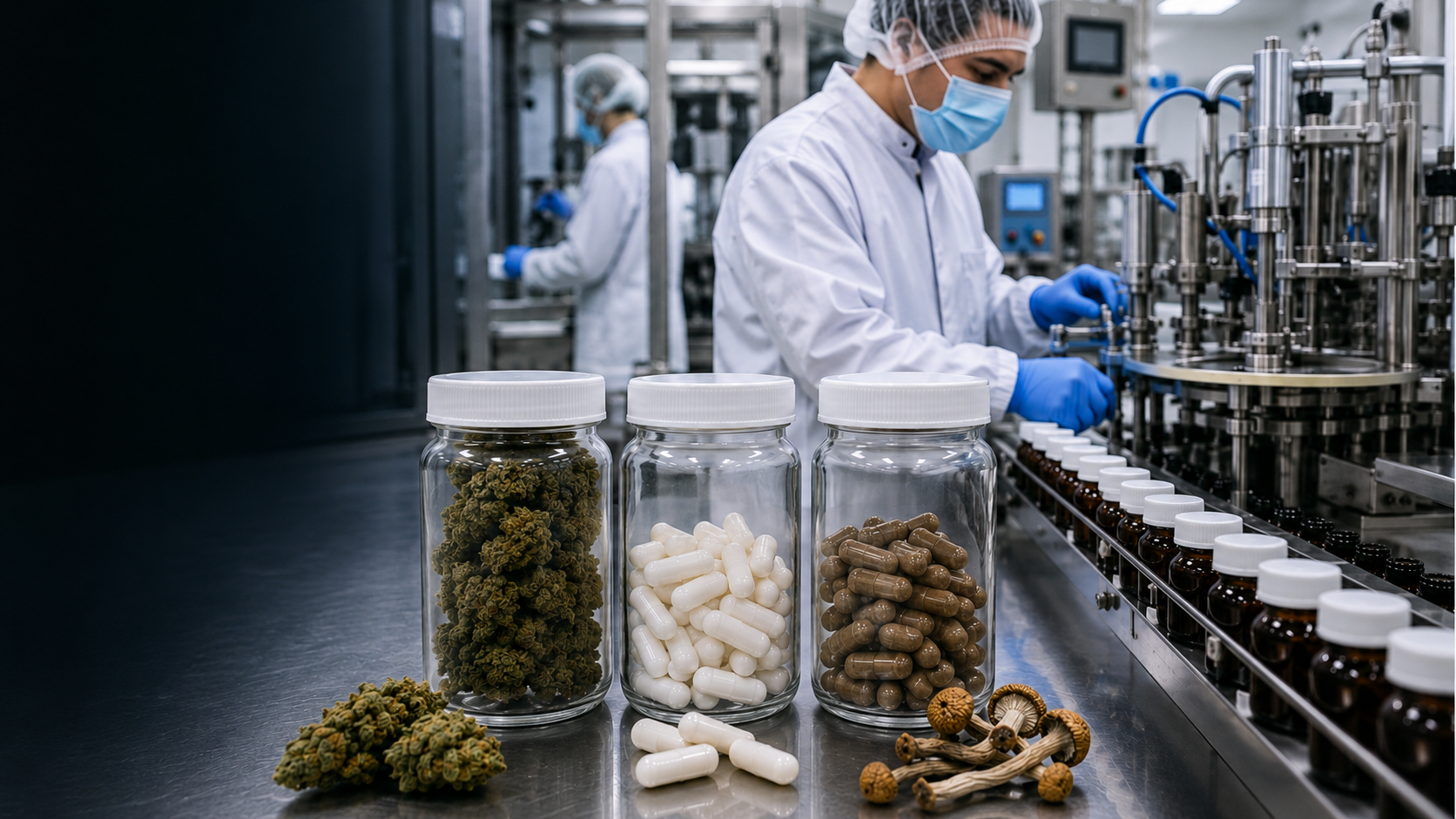
An ABC news segment featured the company’s pharmaceutical manufacturing operations, including medicinal cannabis products, MDMA capsules and pharmaceutical-grade psilocybin. The coverage arrived as the ASX-listed healthcare company continues progressing a proposed 10-for-1 share consolidation, creating a rare moment where operational progress and corporate restructuring intersected in public view.
For industry observers, the combination offered a timely snapshot of a company that appears to be evolving beyond its origins as a medicinal cannabis business.
At the centre of that evolution is Breathe Life Sciences, Bioxyne’s pharmaceutical manufacturing arm. While psychedelic medicines captured much of the public attention, the more important story may be the infrastructure that sits behind them. Manufacturing controlled medicines under pharmaceutical standards requires years of regulatory work, facility development, quality systems and compliance processes. It is not something competitors can replicate overnight.
That may prove to be one of Bioxyne’s greatest assets.
Australia remains one of the world’s most closely watched psychedelic medicine markets following the TGA’s 2023 decision to permit authorised psychiatrists to prescribe MDMA and psilocybin under specific circumstances. The move placed Australia at the forefront of regulated psychedelic medicine and created demand for clinical services, specialist training and pharmaceutical supply.
While much of the industry discussion focuses on treatment outcomes and patient access, manufacturing remains a critical part of the equation.
The ABC footage demonstrated that Bioxyne is already producing medicinal cannabis products, MDMA capsules and pharmaceutical-grade psilocybin. For a sector still in its early stages, that is a notable achievement.
At the same time, perspective is important.
Psychedelic medicines currently represent only a small component of Bioxyne’s broader business. Medicinal cannabis remains the larger commercial opportunity, supported by a significantly bigger patient base and more established prescribing pathways. Rather than transforming into a psychedelic company, Bioxyne appears to be extending existing pharmaceutical capabilities into an adjacent market.
That distinction matters because it reduces reliance on any single industry trend. If psychedelic prescribing expands over time, the company has already established a foothold. If growth is slower than expected, medicinal cannabis and pharmaceutical manufacturing remain the foundation of the business.
The proposed share consolidation tells a similar story.
Prior to the proposal, Bioxyne had approximately 2.27 billion shares on issue. The 10-for-1 consolidation does not change the underlying value of the company, but it does simplify the capital structure and reflects a business that appears to be positioning itself for its next stage of development.
For Chief Executive Officer Sam Watson, the challenge now shifts from building capability to executing on it. The facilities are in place, the manufacturing capability exists and the regulatory groundwork has largely been completed.
The next question is how effectively those assets can be leveraged as Australia’s medicinal cannabis and psychedelic medicine sectors continue to mature.
Bioxyne is not the largest company in either market, nor is it solely defined by either of them. Increasingly, it resembles a pharmaceutical manufacturing business with exposure to several emerging healthcare sectors.
Today’s ABC segment offered a glimpse inside the facilities.
The proposed consolidation offers a glimpse into management’s broader ambitions.
Together, they suggest a company preparing for a positive next chapter.