
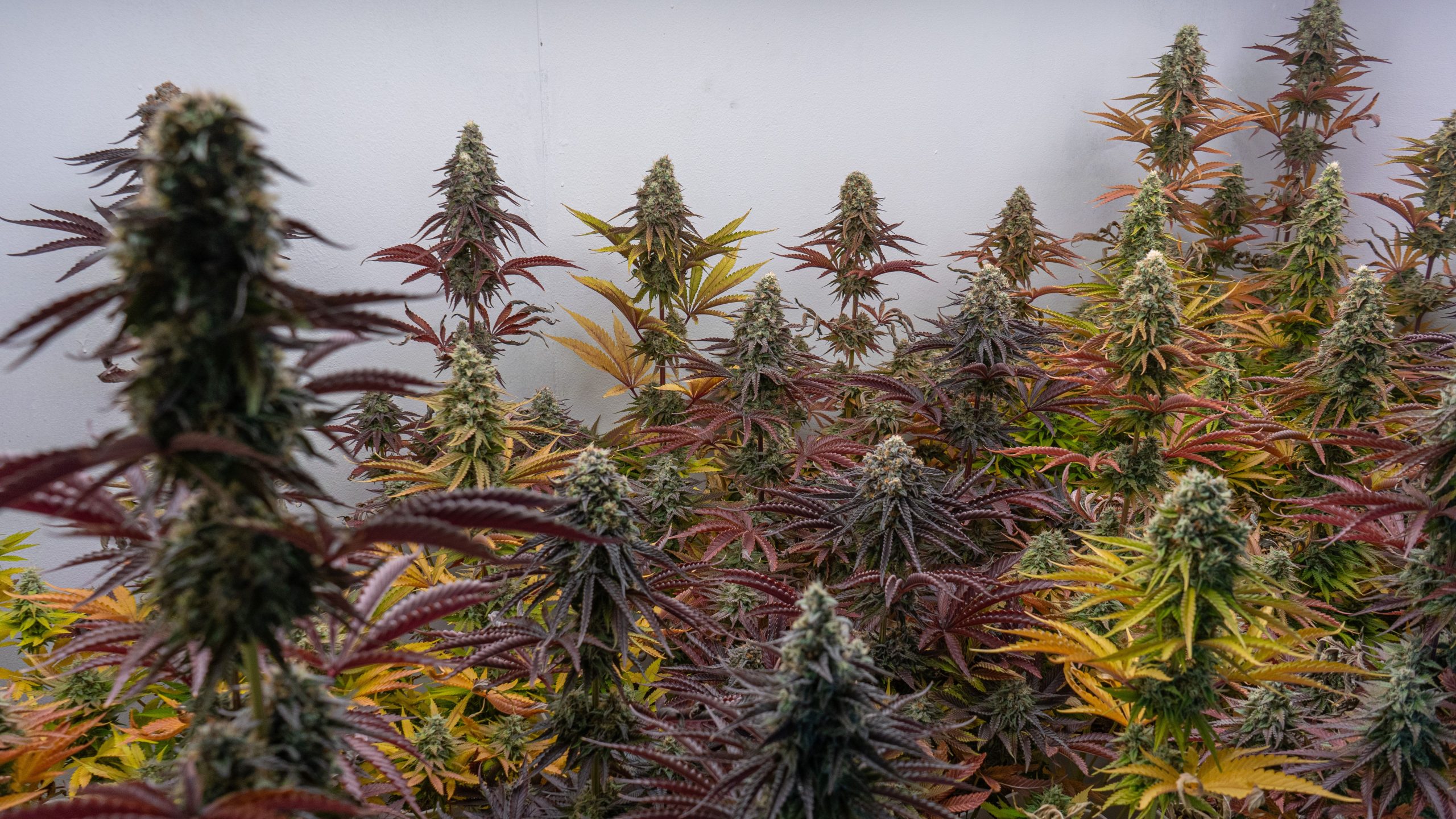

Australia’s listed cannabis sector has become increasingly difficult to define simply as “cannabis”.
The latest results show companies moving in different directions, from pharmaceutical manufacturing and international exports to branded medicines, digital healthcare, clinical services and psychedelic medicine.
The financial performance is mixed. Some businesses are scaling rapidly and generating meaningful profits. Others are dealing with margin pressure, restructuring their balance sheets or trying to build more sustainable business models.
Taken together, the results point to an ASX cannabis sector that is becoming more diverse, with several companies expanding beyond cultivation and domestic cannabis sales into broader regulated healthcare markets.
BLS Pharmaceuticals: The standout growth story
BLS Pharmaceuticals (ASX: BLS) delivered one of the strongest headline financial results among Australia’s listed cannabis companies.
FY26 revenue increased 161% to $74.2 million, while Adjusted EBITDA rose 171% to $19 million, producing a 26% Adjusted EBITDA margin.
NPAT more than tripled from $4.9 million to $15.4 million.
The company also significantly expanded its international pharmaceutical manufacturing business during the year.
A key development was a two-year pharmaceutical supply agreement with Germany’s ADREXpharma worth approximately $50 million, including a $25 million minimum purchase commitment during the first year.
BLS also commenced manufacturing for Aurora Cannabis, entered Costa Rica through its first commercial supply agreement and continued developing its GMP pharmaceutical manufacturing facility in Scotland.
The company has entered FY27 with guidance for $105 million to $115 million of revenue and an Adjusted EBITDA margin of 23% to 26%.
BLS is therefore moving well beyond the traditional cannabis producer model. Its growth is increasingly tied to GMP manufacturing, international supply and the production of regulated pharmaceutical products.
Vitura Health: Scale is not the same as margin
Vitura Health (ASX: VIT) remains one of Australia’s largest listed businesses with significant exposure to the medicinal cannabis market.
Revenue increased 5.7% to $131.2 million in FY26, but profitability deteriorated sharply.
The company reported a $4.4 million net loss, compared with a $3.1 million profit in FY25, while Normalised EBITDA fell 66.3% to approximately $3.0 million.
The issue was not a lack of revenue. It was margin pressure.
Increasing competition and price compression in the medicinal cannabis market weighed on profitability, highlighting the difficulty of maintaining earnings as the Australian market becomes more competitive.
Vitura’s Canview platform remained a significant asset, with more than four in five Australian pharmacies actively dispensing medicinal cannabis represented on the platform.
The company has also been restructuring its leadership team and reducing costs, with management targeting improved earnings quality and a return to sustainable profitability.
Vitura provides an important counterpoint to BLS.
The revenue scale is already there. The challenge is converting that scale into attractive and sustainable margins.
Little Green Pharma: International markets remain critical
Little Green Pharma (ASX: LGP) reported $42.5 million in revenue for the year ended 31 March 2026, an increase of 15.3%.
Adjusted EBITDA increased to approximately $6.5 million, compared with $2.9 million previously.
International markets, particularly Europe, continued to play an important role in the company’s growth.
Germany remains a key market for Australian medicinal cannabis exporters, while LGP has continued to develop its European pharmaceutical distribution platform.
LGP’s subsequent merger with Cannatrek, completed in June 2026, is also strategically significant.
The combined LGP Cannatrek business brings together cultivation, manufacturing, distribution and branded products, creating a substantially larger Australian medicinal cannabis platform.
The full financial impact of the combination will become clearer in future reporting periods.
For LGP, the results reinforce the importance of international markets and scale as the Australian medicinal cannabis industry becomes more competitive.
ECS Botanics: A meaningful move into profitability
ECS Botanics (ASX: ECS) delivered one of the more notable operational improvements of the reporting season.
Revenue increased 10% to $21.4 million.
More importantly, EBITDA moved from a $5.2 million loss to positive $0.6 million, while operating cash flow improved from a $5.1 million outflow to approximately $0.5 million positive.
The company’s branded B2C business was a major growth engine.
Revenue from the division increased 101% to $13.7 million, representing approximately 65% of total group revenue.
The shift reflects an attempt to capture more value through proprietary brands rather than relying primarily on wholesale cannabis sales.
The Australian market has become increasingly competitive at the wholesale level, putting pressure on pricing and margins. ECS is responding by combining its cultivation and manufacturing capabilities with a larger branded consumer business.
The FY26 result suggests that strategy is beginning to translate into improved financial performance.
Epsilon Healthcare: Manufacturing is becoming the story
Epsilon Healthcare (ASX: EPN) is another company undergoing a significant transition.
Epsilon’s latest reporting does not provide a directly comparable FY26 annual result to the June-year companies above, so it should not be presented as though it has completed the same reporting cycle.
Its June 2026 quarterly update nevertheless provided an indication of the company’s momentum.
Epsilon reported record quarterly receipts of $3.66 million, up 72% year-on-year and 17% above its previous quarterly record.
Group revenue for the quarter was $4.7 million, while the business was tracking at approximately a $16 million annualised revenue run rate.
More importantly, Epsilon Pharma’s contract development and manufacturing operation delivered 122% year-on-year growth during the quarter.
The company is also expanding its pharmacy business and manufacturing capabilities.
That gives Epsilon a different growth story to companies primarily exposed to domestic medicinal cannabis distribution. Its strategy is increasingly centred on a broader healthcare platform spanning pharmacy, manufacturing and contract development.
The company’s recovery from its previous financial difficulties makes execution particularly important.
Cann Group: A restructuring story
Cann Group (ASX: CAN) reported a $20.3 million statutory profit for FY26.
The headline figure requires considerable context.
The result was dominated by a $55.3 million gain from debt forgiveness following the company’s financial restructuring. It should therefore not be interpreted as evidence that Cann’s underlying operations have suddenly become highly profitable.
FY26 revenue declined to $8.6 million, while normalised EBITDA remained negative at approximately $3.7 million.
The more significant development was the improvement in the company’s financial position following the restructuring, which substantially reduced its debt burden and gave the business a more viable platform from which to rebuild.
Cann’s net assets stood at approximately $29.1 million at year-end.
The next challenge is operational rather than financial engineering: using its cultivation and manufacturing infrastructure to rebuild revenue and move towards sustainable profitability.
Emyria: Cannabis is giving way to psychedelics
Emyria (ASX: EMD) represents another direction emerging from Australia’s medicinal cannabis ecosystem.
FY26 revenue increased approximately 210% to $4.3 million, supported by growth in its Empax psychedelic-assisted therapy network and related clinical activities.

Emyria is developing a business model around the infrastructure required to deliver psychedelic-assisted psychotherapy.
That includes clinical services, treatment networks, research capabilities and partnerships with pharmaceutical and psychedelic medicine developers.
Its trajectory provides an example of how companies that emerged from Australia’s medicinal cannabis ecosystem are beginning to build positions in psychedelic medicine.
Emyria is therefore operating in a very different part of the market to companies focused primarily on cannabis cultivation, manufacturing or distribution.
The sector is splitting into different models
Looking across the results, Australia’s listed cannabis companies are increasingly pursuing different business models.
BLS is building an international pharmaceutical manufacturing platform.
LGP is expanding an integrated medicinal cannabis business with a strong European focus.
ECS is demonstrating improving profitability through branded products and manufacturing.
Vitura has substantial revenue scale but is confronting intense domestic price and margin pressure.
Epsilon is rebuilding around healthcare, pharmacy and contract manufacturing.
Cann Group is attempting to turn financial restructuring into operational recovery.
Emyria is moving into psychedelic-assisted psychotherapy and the broader psychedelic medicine ecosystem.
These businesses are no longer competing for exactly the same opportunity.
That may be one of the most important conclusions from the latest reporting season.
The listed cannabis sector is becoming less homogeneous, with companies increasingly differentiating themselves through manufacturing capability, proprietary brands, international distribution, clinical infrastructure and exposure to emerging therapeutic markets.
What comes next?
The Australian medicinal cannabis market has matured considerably.
Competition has intensified and price compression has put increasing pressure on margins, particularly for businesses heavily exposed to domestic cannabis distribution.
For those companies, scale alone may not be enough to protect earnings.
International markets offer another avenue for growth.
Germany and other European markets are becoming increasingly important for Australian GMP manufacturers and exporters, creating opportunities for companies with the regulatory expertise and manufacturing capacity to supply pharmaceutical-grade products at scale.
Another emerging opportunity is psychedelic medicine.
As clinical research progresses and regulatory frameworks develop, the sector will require pharmaceutical manufacturing, clinical infrastructure, specialist healthcare providers and supply chains capable of operating within tightly regulated environments.
Some companies that emerged from the medicinal cannabis industry are already positioning themselves in parts of that ecosystem.
The opportunity is still developing, and the commercial models remain far less established than those of medicinal cannabis. But the infrastructure being built today could become relevant if psychedelic medicines move further into mainstream clinical practice.
The bottom line
The FY26 results do not tell a single story.
There are clear growth businesses, companies under margin pressure and businesses still rebuilding after difficult periods.
But they do point to a broader change in the composition of Australia’s listed cannabis sector.
The industry is moving beyond a model centred primarily on cultivation and cannabis sales. Pharmaceutical manufacturing, international supply, branded medicines, clinical services and psychedelic therapeutics are becoming increasingly important parts of the landscape.
The companies that ultimately create the most value may not necessarily be the ones that sell the most cannabis.
They may be the ones that build scalable businesses around manufacturing, distribution, healthcare delivery and the infrastructure required to bring regulated medicines to market.
FY26 was not the end of the cannabis story. It was a year in which the businesses emerging from that industry increasingly began to look like something broader.