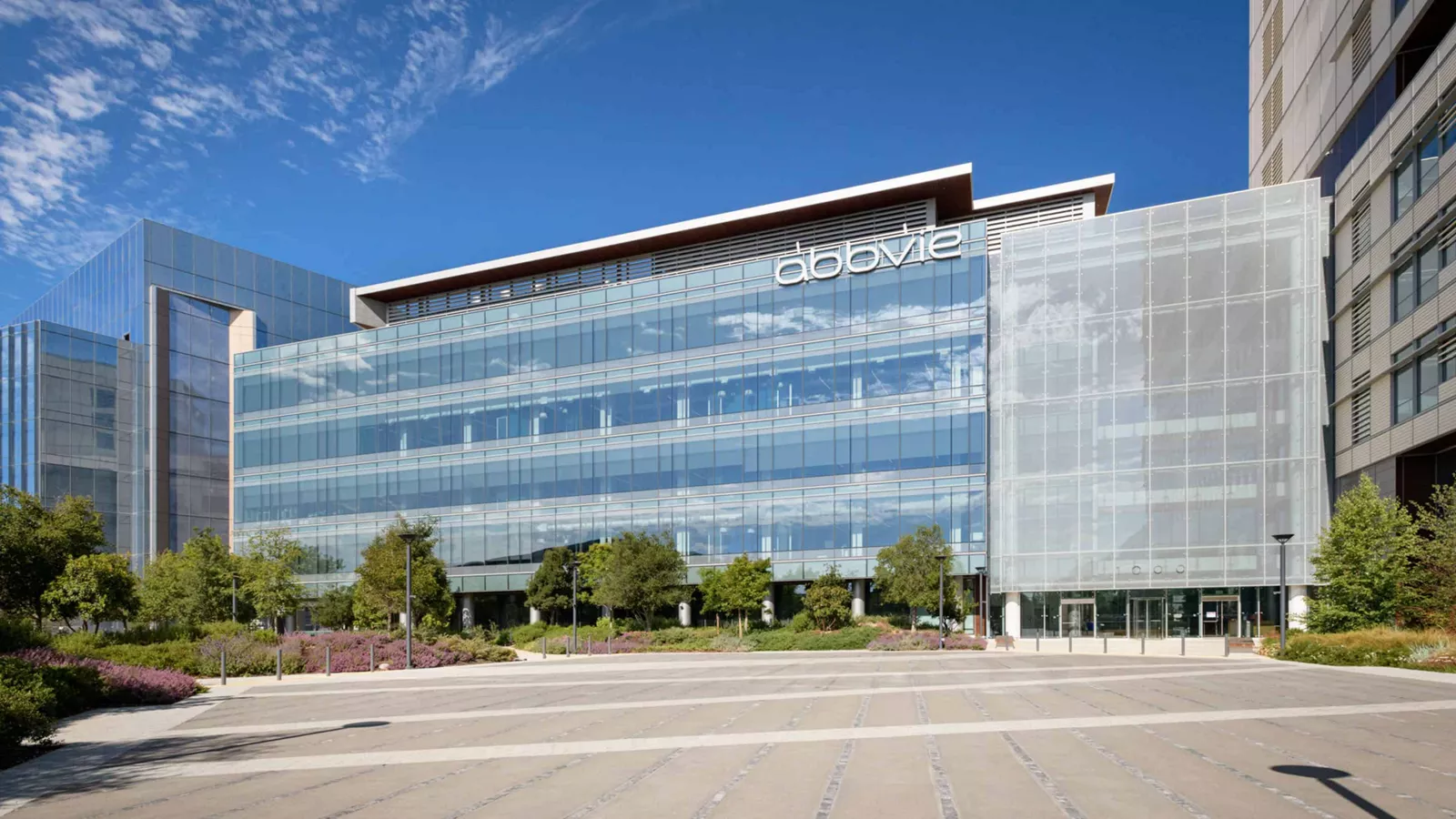

The US pharmaceutical giant has put $906 million behind a next-generation psychedelic for depression, giving one of the industry’s largest players a significant position in the emerging field.
There is a point in the development of a new class of medicines when the conversation starts to change. Early research is largely concerned with whether a treatment works and whether the underlying biology is worth pursuing. Later, the questions become more practical: can it be manufactured reliably, administered safely, reimbursed by healthcare systems and delivered to enough patients to make commercial sense?
Psychedelic medicine is beginning to enter that stage.
AbbVie is now one of the pharmaceutical companies with a serious position in the field, following its acquisition of bretisilocin, a short-acting psychedelic originally developed by Gilgamesh Pharmaceuticals for major depressive disorder.
AbbVie completed the acquisition in October 2025, paying $906 million upfront for the programme. Previously known as GM-2505, the compound is now designated ABBV-2505. It is a serotonin 5-HT2A receptor agonist and 5-HT releaser, and was developed with a particular challenge in mind: how to preserve the therapeutic potential associated with psychedelic pharmacology without requiring patients to spend several hours in an intense altered state.
That question has become increasingly important as the psychedelic industry moves closer to mainstream drug development.
Why AbbVie paid $906 million
The size of AbbVie’s investment is significant in itself.
The company had already been working with Gilgamesh before the acquisition. In 2024, the two entered a collaboration and option-to-license agreement covering next-generation neuroplastogens for psychiatric disorders. AbbVie subsequently moved to acquire Gilgamesh’s lead asset outright.
By the time of the transaction, bretisilocin was no longer simply an early-stage laboratory programme. It had entered Phase 2 development for moderate-to-severe major depressive disorder, with Phase 2a results showing a statistically significant reduction in depressive symptoms.
In the study, patients receiving a single 10 mg dose recorded a 21.6-point reduction from baseline on the Montgomery-Åsberg Depression Rating Scale at Day 14, compared with a 12.1-point reduction for the low-dose active comparator. The reported p-value was 0.003.
Those results were encouraging, although they are still a long way from establishing that the treatment will work in larger and more diverse patient populations. Phase 3 development will ultimately provide a much more meaningful test of efficacy, safety and durability.
For AbbVie, however, the data were sufficient to justify a substantial investment in a programme addressing a problem that fits neatly within its broader neuroscience strategy.
AbbVie already has a large neuroscience business
It would be easy to look at the acquisition as AbbVie simply entering psychedelics. The company’s existing business makes the move more interesting than that.
AbbVie has spent several years expanding its presence in neuroscience and psychiatry, including through its acquisition of Cerevel Therapeutics. The company now describes neuroscience as its fastest-growing therapeutic area, with the division generating $10.8 billion in revenue during 2025.
Its existing psychiatric franchise also gives it a commercial platform that most psychedelic companies simply do not have.
VRAYLAR, AbbVie’s cariprazine product, generated $1.071 billion in global revenue in the second quarter of 2026, an 18.9% increase from the same period a year earlier. Across the company’s neuroscience portfolio, quarterly revenue reached $3.228 billion, up 20.3%.
That means AbbVie is not starting from scratch in psychiatric medicine. It already has relationships with clinicians, clinical-development infrastructure, regulatory expertise, manufacturing capabilities and a commercial organisation operating in the same broad therapeutic area.
Bretisilocin is therefore being developed within a much larger neuroscience business rather than as a standalone experiment in psychedelics.
Shortening the psychedelic experience
The commercial logic behind bretisilocin is closely tied to the practical limitations of conventional psychedelic treatment.
Classic psychedelics can produce powerful and prolonged subjective effects. For clinical research, that can be managed with carefully controlled environments and trained staff. Scaling that model across an ordinary healthcare system is considerably more difficult.
A treatment that requires several hours of supervised administration, along with preparation, monitoring and psychological support, places obvious demands on clinics and healthcare professionals. It can also affect the eventual cost of treatment and the number of patients a service can accommodate.
This is one reason a number of pharmaceutical companies and biotechnology groups have become interested in compounds that attempt to produce psychedelic or psychedelic-adjacent pharmacology over a shorter period.
Bretisilocin is one such approach. AbbVie describes it as a short-acting 5-HT2A receptor agonist and 5-HT releaser designed to address some of the development challenges associated with classic psychedelics.
If that approach works clinically, the implications extend beyond reducing the length of a treatment session. A shorter and more predictable administration window could potentially make it easier to integrate the medicine into existing psychiatric services, although exactly how that would work will depend on the eventual clinical data and regulatory requirements.
For the pharmaceutical industry, that is an important part of the proposition. The objective is not simply to reproduce the psychedelic experience. It is to develop a medicine that can function within the systems that already deliver psychiatric care.
A broader shift in psychedelic drug development
This is where AbbVie’s involvement is particularly relevant to the wider industry.
Much of the early psychedelic movement was built around the experience itself. The intensity and unusual nature of that experience were central to both the scientific interest and the public attention surrounding compounds such as psilocybin, LSD and DMT.
Pharmaceutical development operates under a different set of priorities.
Duration, pharmacokinetics, dosing, safety, manufacturing, reproducibility and patient selection all become increasingly important as a programme moves towards registration and commercialisation. The subjective experience remains relevant, particularly where it may contribute to the therapeutic mechanism, but it is only one part of the development equation.
AbbVie appears to be approaching bretisilocin within that framework.
The question is not simply whether the compound produces a psychedelic effect. It is whether the pharmacology can produce a clinically meaningful and durable improvement in depression, with a safety and administration profile that makes the treatment viable outside a tightly controlled research environment.
That is a much more conventional pharmaceutical question, even if the underlying biology is anything but conventional.
Bretisilocin is part of a much larger neuroscience pipeline
The acquisition also needs to be viewed alongside AbbVie’s wider investment in psychiatric drug development.
The company’s neuroscience pipeline includes emraclidine, an orally administered muscarinic M4 positive allosteric modulator being developed for schizophrenia and psychosis, as well as ABBV-932 for bipolar depression and generalised anxiety disorder and ABBV-1354 for major depressive disorder and bipolar depression.
AbbVie is also investing in ways to improve how psychiatric disorders and treatment responses are measured, including biomarkers, high-frequency measurements of mood and behaviour, AI-enabled analysis, EEG, functional imaging and genetic analysis.
That work could become increasingly relevant to psychedelic medicine, where researchers are still trying to understand the relationship between the acute subjective experience, changes in brain function and longer-term clinical outcomes.
A more sophisticated approach to measuring those changes could eventually help pharmaceutical developers identify which patients are most likely to respond, how treatments should be dosed and which biological signals are associated with sustained improvement.
For now, those remain areas of active research rather than established clinical practice.
AbbVie is still looking for opportunities
The bretisilocin acquisition also took place within a company that continues to spend heavily on external innovation.
AbbVie reported $13.8 billion in R&D investment during 2025, with approximately 90 compounds, devices and indications in development. It also reported more than $5 billion in new business development investment during the year.
That makes it difficult to view the Gilgamesh acquisition as a one-off bet on an unusual corner of biotechnology.
The more interesting question is what comes next.
There are already numerous smaller companies developing psychedelic and next-generation psychedelic compounds, many of which lack the capital and infrastructure required to take a promising asset through late-stage development. If AbbVie continues to see potential in this area, those companies could become acquisition or licensing targets as their programmes mature.
There is no guarantee that happens, and bretisilocin itself still has substantial clinical risk. But the acquisition demonstrates that AbbVie is prepared to deploy significant capital in the sector when it sees an asset that fits its broader strategy.
The commercial question comes later
For the psychedelic industry, it can be tempting to treat a deal of this size as validation of the entire field. It is certainly evidence that a major pharmaceutical company sees enough potential in psychedelic-derived pharmacology to make a substantial investment.
It does not, however, mean that every psychedelic business model will work.
The eventual commercial proposition will depend on the clinical data. A treatment can produce an impressive signal in an early trial and still fail in larger studies, encounter safety issues or prove difficult to position within existing healthcare systems.
Bretisilocin will also need to demonstrate that any advantages associated with its shorter duration do not come at the expense of efficacy or durability.
If it succeeds, however, the consequences could extend well beyond AbbVie.
A clinically effective short-acting psychedelic medicine could strengthen the case for a broader generation of compounds designed around the pharmacology of psychedelics while reducing some of the practical constraints associated with traditional psychedelic-assisted therapy. It could also change the competitive landscape for companies developing longer-acting compounds.
The industry would have another model for what a psychedelic medicine could look like.
AbbVie has made its position clear
The psychedelic sector has spent much of the past decade establishing that these compounds deserve serious scientific attention. The next phase is likely to be more demanding.
Companies will have to demonstrate not only that their treatments can improve symptoms, but that they can do so safely, consistently and in a form that healthcare systems can realistically deliver.

AbbVie has put $906 million behind one programme that is attempting to address precisely that challenge.
Bretisilocin remains an investigational medicine, and the results of larger clinical trials will ultimately matter far more than the size of the acquisition or the reputation of its owner. There are still significant questions around efficacy, safety, durability, dosing and administration.
But the strategic direction is clear. AbbVie is no longer simply watching the development of psychedelic medicine from the sidelines. It owns a major next-generation programme and is developing it within one of the world’s largest neuroscience businesses.
For an industry that has spent years asking whether psychedelic science can become medicine, that is an important development. The more difficult question now is whether companies such as AbbVie can turn that science into treatments that fit the realities of mainstream psychiatry.