
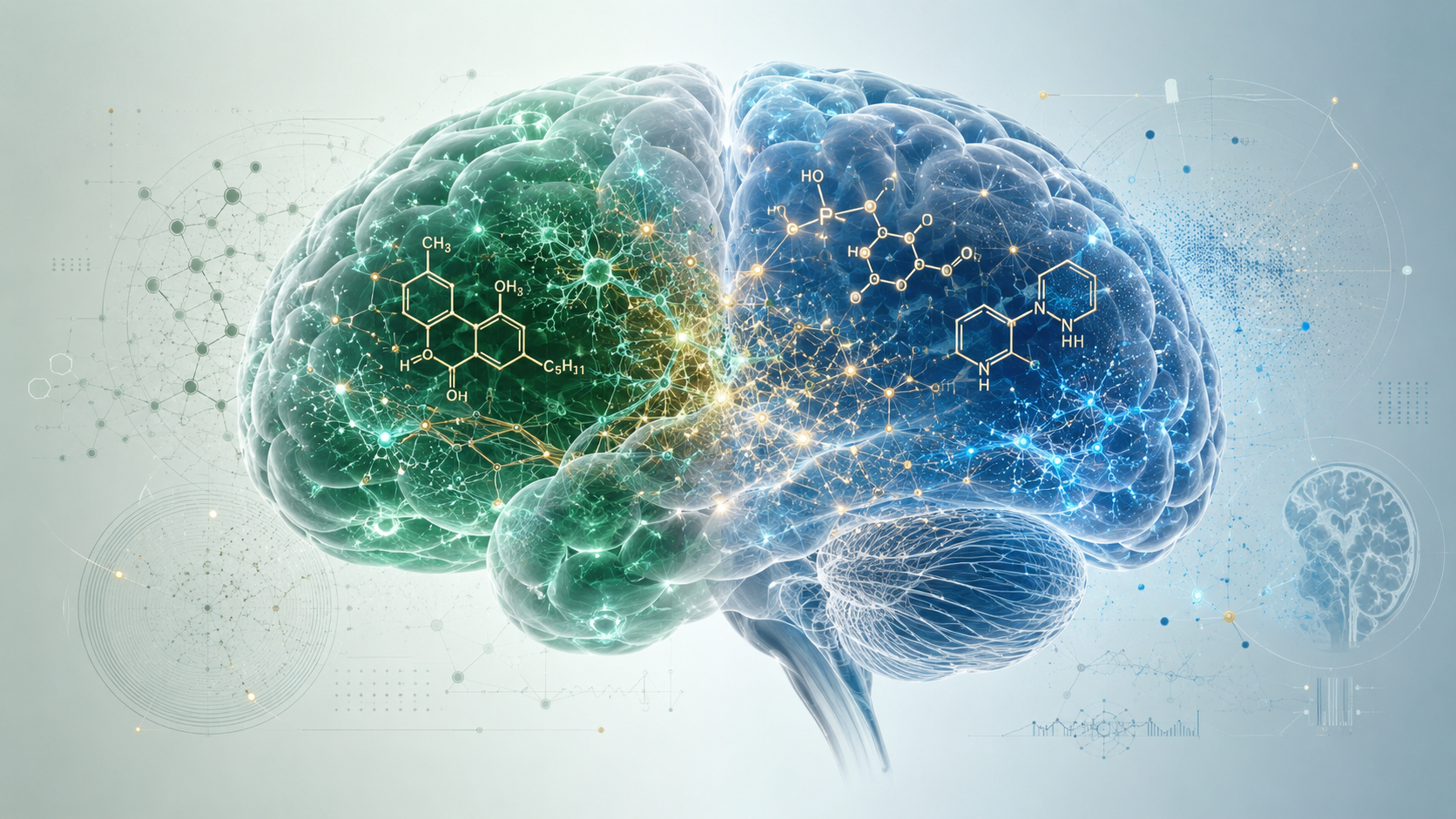

Medicinal cannabis and psychedelic medicine are often discussed as part of the same healthcare revolution.
Both involve substances that spent decades under prohibition. Both have re-emerged through scientific research rather than political ideology. Both promise new therapeutic options for patients who have not responded to conventional treatments. And both are challenging long-held assumptions about how medicine approaches some of the world’s most complex physical and mental health conditions.
Yet despite these similarities, medicinal cannabis and psychedelic medicine are fundamentally different.
They target different conditions, work through different biological systems, follow distinct regulatory pathways and have evolved in remarkably different ways. Understanding those differences is becoming increasingly important for clinicians, investors, policymakers and healthcare companies as both sectors continue to mature.
Rather than competing industries, medicinal cannabis and psychedelic medicine are better understood as two parallel movements that are gradually converging around a shared goal: expanding evidence-based treatment options for patients with unmet medical needs.
Medicinal Cannabis vs Psychedelic Medicine at a Glance
| Medicinal Cannabis | Psychedelic Medicine |
|---|---|
| Acts primarily on the endocannabinoid system | Acts primarily on serotonin pathways (or other neurotransmitter systems, depending on the medicine) |
| Typically prescribed for ongoing use | Generally delivered through structured treatment programs or supervised sessions |
| Used across a broad range of physical and neurological conditions | Primarily focused on severe mental health conditions and substance use disorders |
| Commercial market led by clinics, manufacturers and pharmacies | Clinical development led by universities, hospitals and biotechnology companies |
| Established patient access in many countries | Emerging regulatory pathways with limited approved indications |
Different Medicines, Different Science
One of the most common misconceptions is that cannabis is a psychedelic.
Scientifically, it is not.
The psychoactive effects of cannabis are primarily driven by delta-9-tetrahydrocannabinol (THC), which acts on the body’s endocannabinoid system through cannabinoid receptors. This system plays an important role in regulating pain, mood, appetite, sleep and memory. Cannabidiol (CBD), another major cannabinoid, has a different pharmacological profile and does not produce the intoxicating effects associated with THC.
Classic psychedelic compounds, including psilocybin, primarily exert their effects through serotonin 5-HT2A receptors, producing profound changes in perception, cognition and consciousness. MDMA, while commonly discussed alongside psychedelic medicine, has its own distinct mechanism of action, increasing the release of serotonin, dopamine and noradrenaline.
Although high doses of THC can produce altered perception, time distortion, dissociation and, in some individuals, hallucination-like experiences, cannabis is not classified as a classic psychedelic medicine.
The biology is different.
So are the therapeutic objectives.
Different Patients, Different Clinical Pathways
Medicinal cannabis has become an established therapeutic option across a broad range of clinical indications, although the quality of evidence varies depending on the condition being treated.
In Australia and many other jurisdictions, patients most commonly access medicinal cannabis for chronic pain, chemotherapy-induced nausea and vomiting, epilepsy, multiple sclerosis-related spasticity and sleep disorders. It is also prescribed for some patients experiencing anxiety and other mental health conditions, although evidence continues to evolve.
Psychedelic medicine has entered healthcare through a much narrower clinical gateway.
Research has focused primarily on treatment-resistant depression, post-traumatic stress disorder (PTSD), end-of-life psychological distress, alcohol use disorder and opioid use disorder. These are often severe conditions affecting patients who have not achieved adequate outcomes with existing therapies.
Unlike medicinal cannabis, psychedelic-assisted therapies are being developed within tightly controlled clinical settings involving extensive patient screening, psychological preparation, supervised dosing sessions and structured integration following treatment.
The two fields are addressing different medical challenges through fundamentally different models of care.
Why Healthcare Has Responded Differently
Another major difference lies in how the medical profession has responded to each sector.
Medicinal cannabis has often generated debate around prescribing practices, product quality, standardisation, evidence across different indications and the rapid expansion of commercial prescribing models.
As patient access has increased, so too has discussion around ensuring prescribing remains aligned with evolving clinical evidence.
Psychedelic medicine has encountered a different type of scrutiny.
Because most development has occurred through universities, teaching hospitals and regulated clinical trials, the conversation has centred less on commercial prescribing and more on therapist training, patient safety, treatment protocols, regulatory oversight and long-term clinical outcomes.
Neither sector has avoided criticism.
The nature of that criticism has largely reflected the different ways each industry has evolved.
Cannabis Built Commercial Infrastructure. Psychedelics Built Clinical Evidence.
Perhaps the greatest distinction between the two industries is the path they have taken to reach mainstream healthcare.
The medicinal cannabis sector expanded through private clinics, telehealth providers, specialist pharmacies, manufacturers and rapidly growing patient demand. In doing so, it demonstrated that medicines once considered controversial could be integrated into regulated healthcare systems.
The psychedelic sector has followed a more traditional biomedical pathway.
Its progress has been driven primarily through university research, hospital-based studies, government funding, specialist psychiatry and carefully designed clinical trials. Commercialisation has generally followed the science rather than leading it.
This difference has shaped how both industries are perceived.
Medicinal cannabis commercialised first.
Psychedelic medicine clinicalised first.
Where the Industries Converge
Despite their different origins, the overlap between medicinal cannabis and psychedelic medicine is becoming increasingly apparent.
Both rely on rigorous scientific research to gain acceptance.
Both require ongoing clinician education.
Both have challenged decades of social stigma surrounding previously prohibited substances.
Both depend on regulators balancing patient access with safety and evidence.
Both have attracted growing investment as healthcare systems search for better solutions to conditions that remain difficult to treat.
Importantly, both industries also reflect a broader shift towards personalised medicine, recognising that patients often respond differently to treatments and that conventional therapies do not work for everyone.
The Future of Integrated Care
As evidence continues to grow, future specialist healthcare services may offer a broader range of therapeutic options tailored to individual patient needs.
That could include conventional pharmaceuticals, psychological therapies, medicinal cannabis where clinically appropriate, ketamine for treatment-resistant depression and, where approved, psychedelic-assisted therapies such as psilocybin or MDMA.
These treatments are unlikely to compete to replace one another.
Instead, they are expected to become part of an increasingly sophisticated clinical toolkit available to healthcare professionals managing complex physical and mental health conditions.
The future of healthcare is unlikely to be defined by a single breakthrough medicine.
It will be defined by giving clinicians more evidence-based options to deliver personalised care.
Looking Ahead
Medicinal cannabis did not create psychedelic medicine.
Nor is psychedelic medicine simply the next chapter of the cannabis industry.
They are distinct therapeutic fields, supported by different scientific evidence, regulatory frameworks and models of care.

However, medicinal cannabis demonstrated that substances once dismissed because of history or stigma could be evaluated through rigorous research, regulated prescribing and evidence-based medicine.
That experience helped shift public attitudes, encouraged policymakers to reconsider long-held assumptions and showed that healthcare systems could responsibly integrate emerging therapies.
Psychedelic medicine is now following its own scientific journey.
For clinicians, investors, policymakers and healthcare companies, understanding both sectors is becoming increasingly important. While medicinal cannabis and psychedelic medicine follow different scientific and commercial pathways, they increasingly intersect through regulation, investment, clinical infrastructure and patient care.
The organisations best positioned for the future may be those that understand both.
Ultimately, the destination may be different, but both industries are contributing to a broader transformation in healthcare—one driven by scientific evidence, responsible innovation and a growing commitment to improving outcomes for patients whose needs have too often gone unmet.