

Australia has earned global recognition for its role in the emerging psychedelic medicines sector. The country’s decision to permit authorised psychiatrists to prescribe psilocybin and MDMA attracted international attention, while a growing ecosystem of clinics, researchers and healthcare providers has helped position Australia as an early leader in the field.
Less attention, however, has been given to the companies developing the medicines themselves.
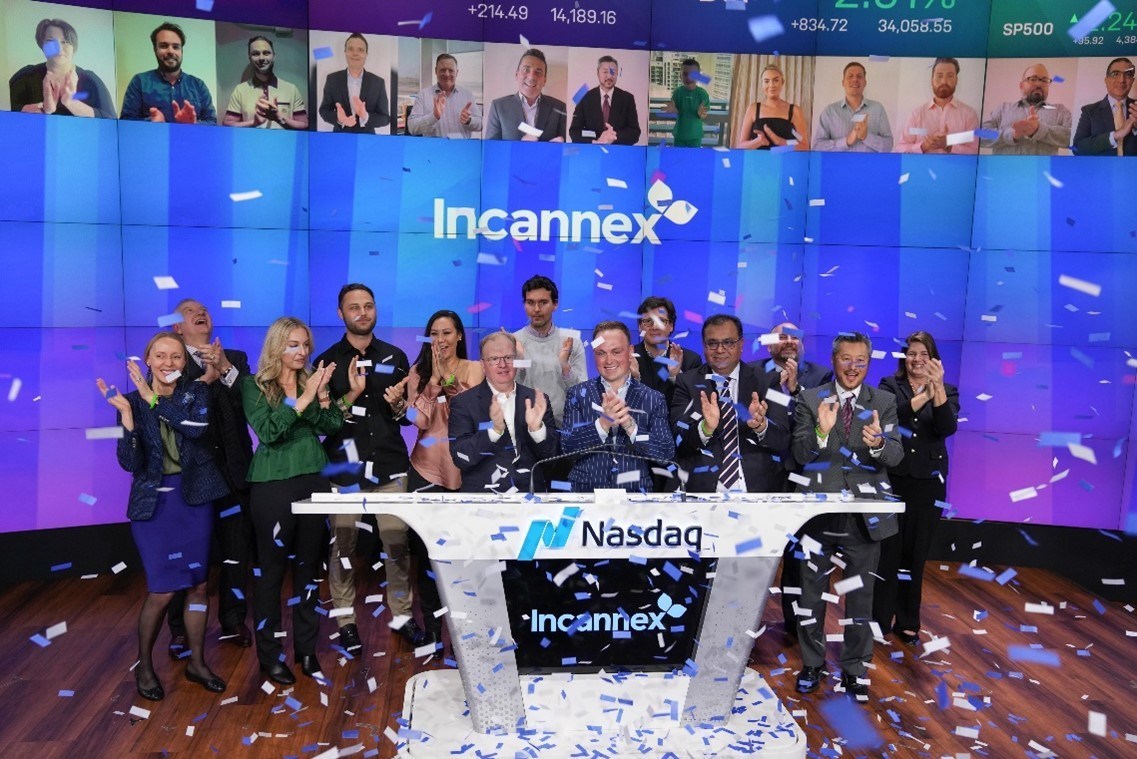
Among them is Incannex Healthcare (NASDAQ: IXHL), an Australian-founded biotechnology company that has quietly pursued a different strategy from many of its domestic peers. Rather than concentrating on Australia’s evolving regulatory landscape, Incannex has shifted its focus to the global pharmaceutical market, relocating its primary listing from the Australian Securities Exchange to Nasdaq in pursuit of international capital and larger commercial opportunities.
The move reflects more than a change of exchange. It highlights a broader challenge facing Australia’s biotechnology sector: while the country excels at scientific research and early-stage innovation, commercialising new medicines often requires access to the deeper pools of specialist capital available overseas.
Why Nasdaq?
Developing a new pharmaceutical is one of the most expensive and time-consuming undertakings in business.
Clinical-stage biotechnology companies typically spend years progressing potential therapies through laboratory research, manufacturing, regulatory submissions and multiple phases of clinical trials before generating meaningful revenue. As programmes advance into late-stage development, costs can quickly escalate into the hundreds of millions of dollars.
Australia has developed a respected biotechnology ecosystem, supported by world-class medical research institutions, high-quality clinical trial infrastructure and generous research and development incentives. However, the domestic investment market remains relatively small when compared with the United States.
Nasdaq has become the world’s leading exchange for biotechnology companies, attracting specialist healthcare funds, institutional investors, pharmaceutical companies and research analysts with extensive experience evaluating clinical-stage drug developers. Investors are generally accustomed to businesses remaining pre-revenue while creating value through intellectual property, clinical milestones and regulatory progress.

For companies seeking to develop globally competitive medicines, that environment can offer advantages that are difficult to replicate elsewhere.
Beyond Psychedelics
Although Incannex is frequently associated with psychedelic medicine, the company has deliberately built a broader neuroscience portfolio.
Its clinical pipeline includes programmes targeting obstructive sleep apnoea, psychiatric disorders, inflammatory diseases and psychedelic therapeutics, reflecting a strategy designed to diversify development risk rather than relying on a single experimental treatment.
That approach distinguishes the company from many publicly listed psychedelic developers, whose valuations often depend heavily on the outcome of one lead clinical programme.
Today, Incannex’s most advanced commercial opportunity is IHL-42X, a proprietary combination therapy being developed for obstructive sleep apnoea, a condition estimated to affect more than one billion people worldwide. During 2026, the company progressed the programme into its DReAMzz clinical study after activating trial sites, completing manufacturing activities and preparing international distribution ahead of patient enrolment.
Its psychedelic programme, PSX-001, is an oral synthetic psilocybin therapy being developed for Generalised Anxiety Disorder (GAD). While many companies in the psychedelic sector have focused on treatment-resistant depression, Incannex has targeted anxiety disorders, one of the world’s most common mental health conditions and an area where many patients continue to rely on long-term treatment with SSRIs and benzodiazepines.
Like every investigational medicine, both programmes remain subject to the uncertainties of clinical development. Success will ultimately depend on demonstrating safety, efficacy and regulatory approval through rigorous clinical trials.
Competing on a Global Stage
Listing on Nasdaq has brought significant opportunities, but also greater scrutiny.
Unlike the ASX, where retail investors account for a substantial proportion of market activity, Nasdaq is dominated by specialist institutional investors accustomed to assessing clinical-stage biotechnology companies. Every clinical update, financing announcement and regulatory milestone is evaluated alongside dozens of competing neuroscience businesses pursuing similar therapeutic markets.
The challenges of operating in that environment became evident during 2025, when Incannex received notice that its share price had fallen below Nasdaq’s minimum bid requirement. The company subsequently completed a 1-for-30 reverse stock split in early 2026 to regain compliance with the exchange’s listing standards.
While reverse stock splits are often viewed cautiously by investors because they can follow prolonged share price weakness, they are not uncommon among development-stage biotechnology companies seeking to maintain exchange listings. The transaction altered the company’s capital structure without changing its underlying assets, clinical programmes or scientific strategy.
For investors, the episode served as a reminder that biotechnology success depends on far more than market sentiment. Clinical execution remains the primary driver of long-term value.
The Bigger Picture
Incannex’s journey reflects a broader reality facing Australian biotechnology.
The country consistently produces innovative science capable of competing internationally, yet many companies eventually require overseas funding to support large-scale clinical development. Nasdaq has become a natural destination for businesses seeking access to larger institutional investors, strategic pharmaceutical partners and deeper capital markets.
The strategy is not unique to Incannex, nor does it guarantee success. Biotechnology remains one of the highest-risk investment sectors, where promising research can take years to translate into approved medicines and clinical setbacks can dramatically alter company valuations.
The same market conditions have affected much of the psychedelic medicines sector. Companies including Compass Pathways, atai Life Sciences, GH Research and MindMed have all experienced significant share price volatility despite continuing to advance their clinical programmes. Higher interest rates, reduced investor appetite for speculative growth companies and broader weakness across biotechnology have weighed on valuations across the industry.
Against that backdrop, Incannex’s decision to pursue international markets appears less like an exception and more like part of a wider evolution in Australian life sciences.
Looking Ahead
Whether Incannex ultimately succeeds will not be determined by where its shares trade, but by the quality of its clinical data.
The company has assembled a diversified neuroscience pipeline, secured access to international capital markets and positioned itself alongside some of the world’s largest biotechnology developers. Those achievements provide a platform for growth, but they are only the beginning of the commercialisation process.
For Australia’s psychedelic medicines industry, the company’s evolution offers another perspective on the sector’s future. While much attention continues to focus on clinics and regulatory reform, long-term success will also depend on Australian companies developing intellectual property capable of competing globally.
Incannex’s move from the ASX to Nasdaq demonstrates that Australian biotechnology can aspire to compete on the world’s biggest stage. The next challenge is one faced by every clinical-stage pharmaceutical company: converting scientific promise into approved medicines that improve patient outcomes.